Thursday, April 24, 2014

A NEW SOURCE OF POTASH

This just in: George Simpson, Jr., Regional Manager of Yara North America, told me right after reading the April 24 issue of TFN that SQM is reintroducing the former “Soda Potash 15-0-14” in an updated form. The analysis is now 15-0-15.  Called Sodium Potassium Nitrate, its potassium is chlorine free and its nitrogen is till 100% nitrate nitrogen. It still has the pink color that growers recognized and appreciated for years.  This product is coming into Wilmington, N.C., next week. It will be available in bulk and bulk bags only.  "Please indicate your interest in this product to your local dealer," says Simpson. "The re-introduction amount will be limited."

FULL THROTTLE TRANSPLANTING FOR FLUE-CURED

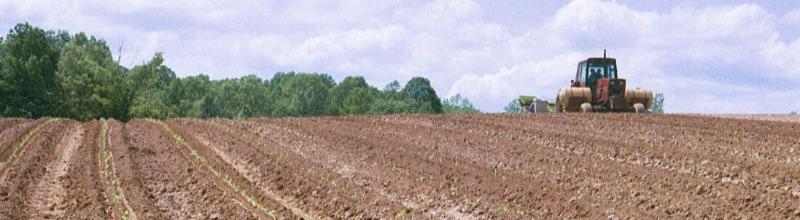
Farmers transplant flue-cured in the N.C. Piedmont near Winston-Salem.
The transplanters are rolling in Johnston County, N.C., a major flue-cured county and most of the Tobacco Belt.  Johnston Extension Director Bryant Spivey tells Tobacco Farmer Newsletter that some flue-cured was set starting on April 10 but transplanting didn't really get going in earnest until yesterday. "The peak period will be from now till May 5," he says. "We might have gotten in sooner but it's been wet and there are still some wet spots." The timing is a little later than normal but not by much. The only growers likely to be affected are those with large Long Adoperations who are trying to spread planting out over a longer period in order to extend the harvest period. 

"There  were a few days when the low temperatures fell to  32 degrees," says Matthew Vann, N.C. specialist. Some farmers had started setting by then, and they may have encountered some frost or freeze issues. However, we haven't heard of any yet." Tobacco transplanted from April 10 to April 15 in Johnston County seems to have survived the cold snap, says Spivey. "The stands are good so far. But the cool temperatures may result in more premature flowering and ground suckers"...Those who haven't started probably will this week or the next. "But some may delay a little longer waiting for warmer temperatures and dryer soils." The bulk of this crop will be set out a little later than normal. "You might say the crop is a week or two behind. But that certainly isn't anything to worry about, especially in the east where we have such a large planting window. From Winston-Salem west, there might be a little more concern."

It's been a hard season for plant production, with the cold and with more cloudy days than usual. "The supply of plants is a little tight, maybe five or 10 percent short of what was planned," says Vann. Spivey says farmers in Johnston County had a little more success in the greenhouse. "I would say we are four to five percent down in useable transplants compared to a a normal year," he says. "But the plants we have are very healthy, and I believe the supply is adequate but close. There is no excess to be had"...Transplanting  remains in the future in Kentucky. "I don't think we have many plants ready to set out, and many aren't even close," says Bob Pearce, Kentucky Extension tobacco specialist. "We got a late start on seeding because of the the cold weather and the price of propane. I would say we are about a week to 10 days behind normal. Now the soil temperatures are low which may delay transplanting further."

The potassium sulfate shortage is for real. And the shortage is taking place at the point of origin, it seems. Pearce says that if a dealer was slow to place his order for this season, he may not have any for his customers. It is not clear what the reasons for the shortage are, and perhaps more will become available later. "We may be able to do a split application if that is the case," Pearce says. If you decide to use an alternative sources of potassium, be careful not to apply too much chlorine, says Vann of N.C. "Chlorine toxicity is a result of excessive chloride accumulation [in flue-cured] and will result in a decrease in leaf yield and quality as well as very poor smoke flavor," says Vann. The quality decrease and smoke problems also occur in burley where too much chlorine has been applied, says Pearce, but yield losses are rare in the heavier soils that burley is typically grown on.

The Palmer's amaranth problem is not going away either. Vann reminds that Spartan is probably the best herbicide weapon against it in tobacco. "If you still have the option of applying Spartan to this crop, it could keep amaranth seed at bay," he says. The Chinese have objected to amaranth seed they found in leaf they bought here and don't want to see any more.

Canada contracts for slightly more pounds. Canadian tobacco growers, all in Ontario, signed contracts with the industry for flue-cured production close to the 2013 level. Licenses have been issued to 241 growers--two fewer than last year--for total plantings of 21,000 acres. The projected yield is 57 million pounds, slightly more than the actual harvest of 56.2 million pounds last year but nine percent below the contracted production of a year ago. The 2013 crop was plagued by a cold spring, some frost, rains that delayed planting, and a very cold stretch in September, according the Ontario Tobacco Marketing Board, which administers the contracting program. Fred Neukamm, farmer-chairman of the board, told the Brantford (Ontario) Expositor that this year's retraction is disappointing but no cause for alarm. "That reduction caught us a bit by surprise but the number of growers hasn't changed much," he said. "The buyers have told us any reductions are the result of normal adjustments."
GAP Recertification Meetings

KENTUCKY (Burley)
  • April 28, 6:30 p.m. Marriott Griffin Gate Hotel, 1800 New-town Pike, Lexington, Ky.  
TENNESSEE
  • April 29, 12 p.m. Rutherford County Extension Office, 315 John R. Rice Blvd., Suite 101, Murfreesboro, Tn.   
  • April 29. 7:30 p.m. Trousdale County High School, 262 McMurry Blvd. W, Hartsville, Tn.
  • April 30. 7:30 p.m. Trousdale County High School, 262 McMurry Blvd. W, Hartsville, Tn.
  • April 30. 10:30 p.m. Robertson County Extension Office, 408 North Main St., Springfield. Contact: pehart@utk.edu, 615-384-7936.
  • May 23, 10 a.m. Hancock Health Department, 178 Willow St., Sneedville, Tn.  Contact: 423-733-2526.
 WTI 

Tytun 2014

Taylor ad

Monday, April 7, 2014

THE GROWING SEASON HAS BEGUN

Workers prepare to transplant
In eastern North Carolina, workers get ready to take plants to the field (file shot).
For the past three weeks, growers in Florida have been setting plants out, says J. Michael Moore, Georgia-Florida Extension tobacco specialist. A few fields in Georgia have been planted. "Mainly just the dry hills," he says. "Next week they will be going full steam." A lot will be planted, he thinks. "The Prospective Plantings projection for Georgia (13,300 acres) is too low," he says. "I am seeing new growers in Georgia, and Florida too, and many existing growers are increasing their plantings. I think 15,000 acres would be closer to the mark in Georgia, with an increase in Florida too." 
 
Warning: Plants could be hard to come by in much of the Tobacco Belt. Tobacco Farmer Newsletter has learned from sources in several states that:
  • In North Carolina, the availability of plants in North Carolina is fairly tight. Matthew Vann, N.C. Extension tobacco specialist, says. "I think growers may fall about 10 percent short of what they originally set out to produce." Many growers hope to go to the field in 10 to 15 days, he says. "It seems we are out of the cold spell. But the weather could certainly get bad again, and it IS possible that it could be a month or so before we really get going in the field."
  • In Georgia, greenhouses are full, and most of the plants are committed. "It's been hard to find anyone who can give us a tray or two for a test plot!" says Moore. So far, the Type 14 plant crop looks very good, with very satisfactory germination, he adds.
  • In Kentucky, there is no overabundance of plants either, says Bob Pearce, Kentucky Extension tobacco specialist. But there appears to be plenty of demand, and he is looking for a big crop. "I think plantings will be strong this year based on what transplant growers are telling me," he says.
  • In Tennessee, plant production is considerably delayed in the north central part of the state, says Bill Corbin of Springfield, Tn. Corbin produces greenhouse plants for sale and for his own use and grows burley and dark. He tells TFN, "I am a week to 10 days behind on my greenhouses. I would like to get my first plantings out in the field by May 10 for customers who double crop their curing barns. But I don't know if I am going to make it." Besides the problems of cold temperatures and limited sunshine, the recent ice storm delayed a lot of deliveries of materials needed for greenhouses. "It's going to take a lot of luck and maybe some magic to get this crop started," he says. "I hadn't realized how accustomed I'd gotten to mild winters."  
In other production news:
  
The loss  of the flue-cured variety NC 71 for this season may lead to more Georgia-Florida growers trying out the three new flue-cured varieties: GL 395, NC 925 and CC 143. "They will be very interested in any of these varieties that show good resistance to Race 1  black shank," Moore says. GF 318, which is only a few years old, may also pick up some of the slack.
 
Potassium sulfate may be in short supply this year, and it is the most popular form of potash. "If you have to buy a different form, be sure that the level of chlorine is very low," says Vann. "Chlorine can affect the quality of leaf."

GAP Recertification schedule: A few more GAP Recertification sessions remain to be held. The last that is currently scheduled is set to take placeApril 30. More could be scheduled. Following is the schedule published to date in the GAP website. For more information, please call 865-622-4606 or visit  www.gapconnections.com.
 
KENTUCKY (Burley)
  • April 15, 6 p.m. Bale Tobacco Marketing, 203 Production Ct.,  Elizabethtown, Ky. Contact: 270-360-8436.
  • April 17, 6 p.m. Receiving Station, 1711 S Danville Bypass. Danville, Ky. Contact: 859-236-1180.
  • April 286:30 p.m. Marriot Griffin Gate Hotel, 1800 Newtown Pike,
    Lexington, Ky. 
  • In addition, there will be two on-line meetings--on April 16 and 22-- that will be carried over a conferencing system that will be hosted at some, but not all, county offices. If you are interested, contact your local extension office to find out the nearest location you can attend.
OHIO
  • April 7, 6:30 p.m. Gallia County Extension Office, 111 Jackson Pk., Gallipolis, Ohio. Contact: Jeff Moore 740-446-7007.

INDIANA
  • April 81 p.m. Southern Indiana Tobacco Meeting, Orange County Community Center, 1075 No. Sandy Hook Rd., Paoli, In. Contact: Levi Berg 812-723-7107berg31@purdue.edu.
TENNESSEE
  • April 297:30 p.m. Trousdale County High School, 262 McMurry Blvd. W, Hartsville, Tn.
  • April 307:30 p.m. Trousdale County High School, 262 McMurry Blvd. W, Hartsville, Tn. 
  • April 3010:30 p.m. Robertson County Extension Office, 408 North Main St., Springfield, Tn. Contact: pehart@utk.edu615-384-7936.

 
USDA-NASS Prospective Plantings Report (3/31/2014)

The U.S. Department of Agriculture projected modest increases in acreage for all tobacco types this year in its March plantings report, with a two percent increase for flue-cured and a one percent increase for burley. All individual states were projected either up or unchanged in acreage except for the mountain burley states of Virginia and North Carolina and for Ohio (also burley). State projections follow. 
 
FLUE-CURED:  North Carolina--182,000 acres,  up  one  percent.  Virginia--22,000 acres, up two percent. South Carolina--15,000 acres, up three percent. Georgia--13,300 acres, up four percent. All flue-cured--232,300 acres, up two percent. 
 
BURLEY: Kentucky--75,000 acres, up one percent. Tennessee--14,000 acres, up four percent. Pennsylvania--5,100 acres, no change. Virginia--2,200 acres, down eight percent. Ohio--2,000 acres, down five percent. North Carolina--1,800 acres, down five percent. All burley--100,100 acres, up one percent.
 
FIRE-CURED: Kentucky--9,200 acres, up two percent. Tennessee--7,200 acres, up four percent.  Virginia--380 acres, up nine percent.  All fire- cured--16,780 acres, up three percent.
 
DARK AIR-CURED: Kentucky--4,300 acres, up two percent. Tennessee--1,100 acres, up 10 percent 10 percent. All dark air-cured--5,400 acres, up four percent.
 
CONNECTICUT/MASSACHUSETTS--3,320 acres, up 26 percent.
 
SOUTHERN MARYLAND--(All in Pennsylvania) 2,000 acres, no change. 
 
PENNSYLVANIA SEEDLEAF--(All in Pennsylvania) 2,000 acres, up 11 percent. 
 
ALL TYPES--361,900 acres, up two percent.  

 WTI 
Tytun 2014
 

Taylor ad

Monday, March 24, 2014

Could liquid nicotine be your next new crop?


GreenhouseTrays in an east Tennessee greenhouse seeded March 8 were waiting for germination on March 13. Variations in temperature had the grower--Jeff Aiken of Tedford--worried about development of the seedlings.


You may soon produce liquid nicotine as an alternate crop. To date, the nicotine for electronic cigarettes (e-cigs) appears to have come from China, India and maybe Eastern Europe, says Rod Kuegel, burley and dark tobacco grower from Owensboro, Ky. "This product should be produced in the U.S. We [Americans] have the best controls on pesticide residues that exist in tobacco. If electronic cigarettes are supposed to be healthier, how can they use nicotine from tobacco that doesn't measure up to ours?" An effort is under way to see if this market could be developed, and he is sure that an experimental batch of liquid nicotine will be produced somewhere in the burley belt this year. However it is produced, the process should not be difficult for Americans to master, says Kuegel, who is president of the Council for Burley Tobacco. 

E-cig manufacturers usually dissolve their liquid nicotine in a solution of propylene glycol, vegetable glycerin or polyethylene glycol, says N.C. Extension economist Blake Brown. The future of e-cigs is difficult to forecast: Brown says one projection suggests that e-cigs will overtake traditional cigarettes in sales volume by 2023. "We will just have to see how the technology advances," he says. "But it's one factor that could really impact the cigarette market in the future."

Reports from the field...

In the coastal plain of South Carolina, cold temperatures in February were bad enough. But Ben Teal of Patrick, S.C., says he was more worried about "three straight days when the sun didn't come out at all." But so far, his plants (seeded February 17) look good, he told TFN earlier today. "I got a pretty good germination, about 85 percent to 90 percent." He plans to bed up some land later this week if the weather cooperates and will start clipping for the first time next week.  
Aiken
Aiken

In eastern Te
nnessee, extreme temperature changes after seeding didn't bode well for greenhouse plants, says Jeff Aiken, who farms in Tedford, Tn., between Greeneville and Johnson City. "If you get conditions like this, there is a chance you will have problems of germination," he says. "We try to avoid wide variations in the temperature inside the greenhouse." He started seeding March 8...Aiken says the acreage of burley has been gradually increasing in his area. "But it is not because there has been a mass reemergence of growers," he says. "It has primarily been a matter of growers who stayed in it planting more." 
In eastern North Carolina, wind damage is often a problem in the spring. Michael Gregory of Four Oaks has found that keeping his rye cover crop growing until the last plowing provides wind protection for young plants. When it is time to bed, they use hooded sprayers to burn down the rye with gramoxone. But not in the truck rows. "What will happen is if it's been dry and the sand gets dry, (then) if we get much wind, it will blow the sand and burn small plants right up," says Gregory, who farms with his father Joe and neighbor Timmy McLamb. When they plow for the last time, they disk up the truck rows at last plowing. 
Gregory
Gregory
A short course on tobacco: Gregory was one of a group of 35 farmers, representatives of government and allied industries who participated recently in a short course designed to promote efficient production of quality tobacco. The N.C. State Tobacco Short Course was held early in 2014. "If you aren't efficient and if you don't manage money very well, you won't survive in the current environment," says Gregory. "But if you cut corners too close, it will hurt in the long run. That's why the short course was so valuable. As remote as we are located, it is hard to keep up with what is happening." He also derived a lot of benefit from talking with growers from other areas and comparing ways of doing things, he says. Besides Gregory, the participants (all from N.C.) were--
  • Farmers: Paul Skinner, Bladensboro; D.J. Byerly, Kernersville; Clayton Eaton, Belews Creek; Jason and Natalie Farmer, Louisburg; Lee and Sydney Dunn, Wendell; Michael High, Bailey; Scott Tilley, Spring Hope; Ross Collins, Maysville; Worth Williams, Farmville; Chad Oxendine, Rowland; brothers James and Cody Hairr, Salemburg; Adam Mitchell, Pinnacle; Jeffrey Boykin, Sims, and Jes Lancaster, Elm City.
  • Government: County agents--Alamance Co.--Dwayne Dabbs; Lee Co., Kim Tungate; Sampson Co.--Della King; and Surry/Yadkin Co.--James Boggs. N.C. Department of Agriculture--Agronomists Adam Lassiter, Chris Jernigan and Chris Leek; Travis Lassiter, Central Crops Research Station, Clayton; Brett Bynam, Andy Myers and Ray Oates, Cunningham Research Station, Kinston; Kyle Miller, Mountain Research Station, Waynesville; Keith Eller, Upper Mountain Research Station, Laurel Springs, and Beth Farrell, Ag Programs specialist. 
  • Industry: Ping Zhang of International Tobacco Co.; Mike Narron, Carolina Precision Consulting; David Grimes, Reynolds Tobacco.
The program was conducted by the N.C. Tobacco Foundation in partnership with the College of Agricultural and Life Sciences at N.C. State University. A grant from the N.C. Tobacco Trust Fund Commission helped fund the program. 
GAP RECERTIFICATION SCHEDULE

All times Eastern unless otherwise noted. For more information, please call 865-622-4606 or visit  www.gapconnections.com

TENNESSEE  (Burley)
  • March 26, 6 p.m. Clyde Austin 4-H Center, 214 4-H Lane, Greeneville, Tn. Contact: 423-798-1710
  • March 27, 6 p.m. Grainger County Meeting, Ag Pavilion, 280 Bryan Rd., Rutledge, Tn. Contact: Anthony Carver, 865-828-3411(bcarver4@utk.edu.)
MARYLAND/PENNSYLVANIA (All types)

Contact for the following meetings is Jeff Graybill, Pennsylvania Extension, Lancaster County, 717-394-6851. 
  • March 31, 11 a.m. Ira Hertzler Farm, 28379 Thompson Corner Rd., Mechanicsville, Md.
  • April 1, 9 a.m. 172 South Lime St., Quarryville, Pa.
  • April 1, 1 p.m. 172 South Lime St., Quarryville, Pa.
  • April 2, 9 a.m. Garden Spot Fire Rescue, 369 East Main St., New Holland, Pa.
  • April 2, 1 a.m. Garden Spot Fire Rescue, 369 East Main St., New Holland, Pa.
  • April 3, 11 a.m. Penn 80 Travel Plaza, 1460 No. Ridge Rd., Milton, Pa.

Tytun 2014
 
 WTI
BulkToBac Barns
Gold Eagle Curing Barns 
 Don't get caught without a C&M setter this season

Taylor ad

Thursday, March 6, 2014

EXPORTS ARE UP BUT NOT TO TRADITIONAL CUSTOMERS

Clipping
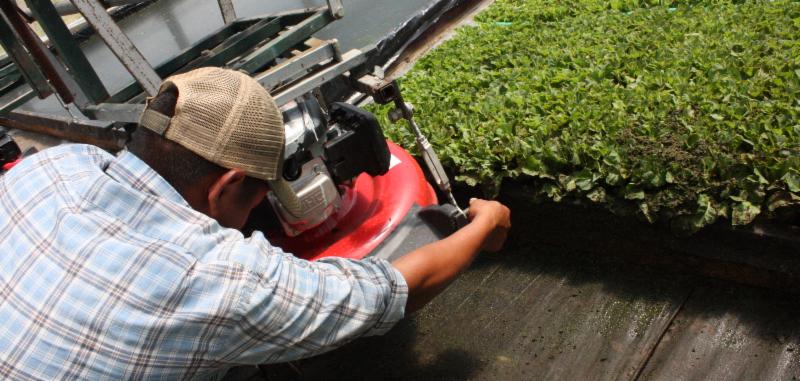
Prepping to clip plants. A worker on a flue-cured farm near Raeford, N.C., prepares a mower to clip greenhouse plants last spring in this file photo.

Exports of U.S. leaf are up, but not because of our traditional customers, says Blake Brown, N.C. Extension economist. "The European Union (traditionally the leading destination for U.S. exports) is trending down." But the demand in China is robust, and that is keeping exports strong, said Brown, who spoke at the recent meeting of Tobacco Associates (TA) in Wilson, N.C. Short global supplies of flavor style, good quality flue-cured should work in our favor.

There appears to be uncertainty among the buying companies about the potential size of the tobacco market this year, says Mack Grady of Cureco, Seven Springs, N.C. They have slowed their contracting considerably since the beginning of this year. "I think this has slowed down the emphasis on updating infrastructure on the farms that we saw earlier. We can still hope the companies will come back with some extra pounds once they are sure what is going to happen in the southern hemisphere." His company has a "plateful" of orders right now, says Grady, about like what it had in 2012 and 2013 at about this time. The company installs curing controls on all kinds of barns. "We are doing old barns, middle-aged barns and new barns," he says. "But we have been slowed by the wet weather this winter. Some of our customers who want to move barns can't because it has been too wet and cold to pour concrete."

But barns continue to move. Bob Pope, general manager of Long Tobacco Barn Company in Tarboro, N.C., says, "Many farmers expressed interested in new barns at the Southern Farm Show, and we sold quite a few. We have continued to sell barns since then and, though we have already taken a lot of orders for 2014 barns, we still have a few June barns left. We will continue building 2014 barns through September." Pope says barn haulers tell him they are very busy moving used barns that are bringing record high prices, which suggests tobacco farmers remain enthusiastic about their future prospects.

A substantial portion of the Kentucky and Ohio burley crop from 2013 may still lack a home. Contracting for 2014 is already well under way but it appears that there is still a lot of 2013 burley left on the farm, says Steve Pratt, GM of theBurley
Raines
Pat Raines
Tobacco Growers Cooperative Association (BTGCA). "That's a problem because most tobacco company receiving stations closed the last week of February," he says. "Here at the cooperative, we are going to keep accepting deliveries till we close March 21, but we can't handle all the leaf that is out there." Part of the problem has been the cold weather, which has made it difficult to get the leaf in case. Some resourceful methods of marketing the remaining burley may be required, says Pratt. "I am sure the auctions will handle some of it." So far, the prices offered for 2014 burley seem similar to last year, says Pat Raines, a Seaman, Ohio, burley grower and BTGCA chairman, who also attended the TA meeting. "I think we (burley growers) may plant five percent more this year," he says.

For flue-cured, a small acreage increase seems likely,
Yarbrough
says Tim Yarbrough, the flue-cured grower in Prospect Hill, N.C., who is the new president of the Tobacco Growers Association of N.C. If that is true and 
if farmers produce an average yield, we might see an average price about ten cents less this season compared to 2013, he says. "That would be livable if we can keep variable costs under control. I hope we are not looking at an oversupply situation. Soft demand and too much tobacco would be a 'perfect storm' leading to a much lower price." Yarbrough, who farms with his brother Kenneth in Caswell County in the Old Belt, says they may increase plantings by five percent. "We are not looking to expand a great deal," he says. "We don't have the land availability we would need." 

Dark air-cured growers in Kentucky and Tennessee will apparently have the opportunity to contract additional pounds this season, although the increase may be modest. "Our yield in 2013 was low, and some companies reported falling 10 percent to 15 percent of their goal," says Andy Bailey, Extension dark tobacco specialist. "I am hearing of growers getting 4,000 pound increases. Burley contracts appear to be similar to last year, and farmers are enthusiastic after the good price for the last crop. "There were some crops in this area that averaged $2.05 at all stalk positions." Plantings of all tobacco types may be favored by the drop in the price of grain. "Farmers may divert some acres into tobacco instead," he says.

Don't seed too soon in Kentucky. March 15 is soon enough to seed greenhouses most years, says Bailey, and that is especially true with the price of propane up. "I hope no one seeded before March 1. In Kentucky, there is no real good reason ever to seed tobacco in February."

How to economize on potassium: "Flue-cured growers don't need to apply as much as they historically have," says Matthew Vann, N.C. Extension tobacco specialist. "We average applying 120 to 130 pounds per acre across the state, while the recommendation is 90 pounds per acre." There is research that has suggested that you can reduce the application rate as low as 75 pounds per acre under certain soil conditions without affecting yield or quality, he says. 
  

GAP RECERTIFICATION SCHEDULE

All times Eastern except as marked. For more information, please call 865-622-4606 or visit  www.gapconnections.com

KENTUCKY (Dark)
  • March 7, 1 p.m. McLean County Extension Office, Calhoun, Ky. Contact: (270) 273-3690.
NORTH CAROLINA (Flue-cured)
  • March 19, 10 a.m. Surry Community College, 630 S. Main St., Dobson, N.C. Contact: 336-371-0189.  
KENTUCKY (Burley)
  • March 19, 6 p.m. (Introduction to Tobacco GAP at 5 p,m,). Mason County Extension Office. 800 U.S. 68, Maysville, Ky. Contact: Tad Campbell, (606) 564-6808 or mcampbel@email.uky.edu.
  • March 20, 6:30 p.m. CT. Barren County Tobacco Meeting, Barren County Extension Office, 1463 West Main St. Glasgow, Ky. Contact: Kristin Goodin, (270) 651-3818, kristin.goodin@uky.edu.
  • March 25, 6 p.m. South East Ky. Tobacco Meeting, Laurel County Extension Office, 200 County Extension Rd., London, Ky. Contact: Glenn Williams (606) 864-4167, victor.williams@uky.edu. 
TENNESSEE (Burley)
  • March 13, 7 p.m. Middle Tennessee Research & Education Center, 1000 Main Entrance Dr., Spring Hill, Tn. Contact: Joe Beeler,jbeeler5@utk.edu.
  • March 17, 6 p.m., Pickett County Agricultural Learning Center, 130 Skyline Dr., Byrdstown, Tn. Contact: Bill Garrett, 931-864-3310.
  • March 26, 6 p.m. Clyde Austin 4-H Center, 214 4-H Lane, Greeneville, Tn. Contact: 423-798-1710. 
  • March 27, 6 p.m. Grainger County Meeting, Ag Pavilion, 280 Bryan Rd., Rutledge, Tn. Contact: Anthony Carver, 865-828-3411 orbcarver4@utk.edu.
OHIO (Burley)
  • March 10, 4 p.m. Ohio Valley Career and Technical Center, 175 Lloyd Rd., West Union, Ohio. Contact: dugan.46@osu.edu.
  • March 10, 7:30 p.m. Ohio Valley Career and Technical Center, 175 Lloyd Rd., West Union, Ohio. Contact: dugan.46@osu.edu.
  • March 19, 1 p.m. Southern Hills Career Center on Hamer Road, Georgetown, Ohio. Contact: dugan.46@osu.edu.

Tytun 2014


 BulkToBac Barns

Gold Eagle Curing Barns

 Don't get caught without a C&M setter this season

Taylor ad


This email was sent to cebickers@aol.com by chrisbickers@gmail.com  

Bickers Editing Service | 903-9 Shellbrook Ct. | Raleigh | NC | 27609

Sunday, February 23, 2014

The season begins

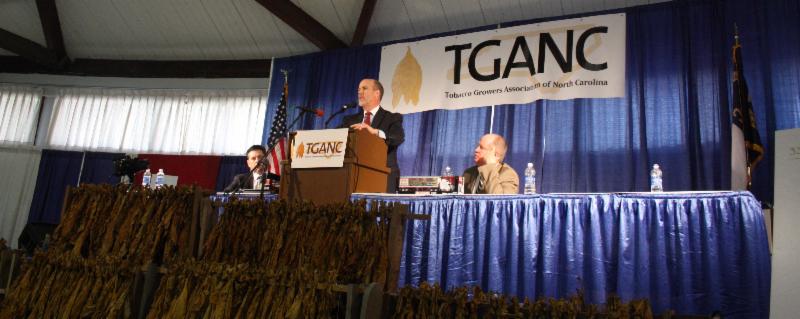
TGANC
Watch out for the "carve out," said PMI executive Jon Huenemann at the annual meeting of the Tobacco Growers Association of N.C. Just to the right is TGANC president Brent Leggett, who had some words of his own on the carve out (see below).

 
It was a good two years, said outgoing president of the Tobacco Growers Association of N.C. (TGANC) Brent Leggett at the organization's annual meeting February 7 in Raleigh, N.C. Tobacco Farmer Newsletter got to talk to him this week and find out his observations after serving two one-year terms:

  • He was very happy that the past two crops had been characterized by good demand and good prices. "Especially in 2013, with the unique weather, I think farmers responded well in getting a product that met buyer demand, and the buyers rewarded them for it. I am glad of that."
  • He is very concerned by efforts of the attorneys general of the United State to exclude tobacco from the Trans Pacific Partnership trade agreement (the so-called "carve out"). "We have to oppose this in every way we can," says Leggett.  "If they think they can succeed at this, they might try it on any number of federal programs. Or other crops--you can just imagine how crops like peanuts or cotton could be vulnerable to this sort of treatment."
  • He thinks the great imponderable for 2014 will be the effect of the end of the buyout. "This will be the first year in a decade we have produced a crop that will not have the benefit of buyout payment assistance following the season," he says. "How will this dynamic affect the stability of the market moving forward?" For more on the TGANC meeting, see below.
The remainder of the Kentucky burley crop should be reaching the market in the next week or 10 days, says Bob Pearce, Kentucky Extension tobacco specialist. "Not much is left," he says. "I was on a farm Monday when stripping there was finished. The rest will be done soon." It would probably all be done already but the extreme cold weather at times had made it hard to get leaf in case. 


There is no hurry among Kentucky growers to start heating their greenhouses, especially if they heat with propane, says Pearce. "If the winter continues cold that could become a cost issue," he says. "I anticipate one of our later starts this year."


The good price of the burley crop has a lot of growers optimistic about 2014, says Steve Walker, Macon County (Tn.) Extension Director. "Our acreage will be up if contracts are available," he says. Most of the burley in the county, which is north of Nashville and borders Kentucky, has been delivered, he says, but there may be a problem for some farmers who have had to delay stripping because of the cold. "The companies may want to close their stations in mid February (or soon after), and for some growers that could make it close." Macon County has greatly increased burley production since deregulation, and growers have improved their tobacco infrastructure with the addition of new barns, says Walker. "The new barns can house several acres of tobacco, and with sufficient labor, hanging can be a speedy process," he says. "Some of new barns are open sided to allow good air movement." 

  
Run to the mailbox if you are a N.C. flue-cured grower and send in your referendum ballot. Ballots for the North Carolina checkoff referendum should reach growers by mail in the vicinity of March 15, says Leggett. The ballots will ask flue-cured producers if they support a checkoff to fund TGANC. Ten cents per hundredweight is the proposed rate. There is a 90-day voting period. "But don't let it lay on your desk, " says Leggett. "Mark it up and send it back as soon as you get it. You know you are not going to want to be doing any paperwork on June 15!"


TGANC presented awards to several individuals and  
Hambrick
Hambrick
one family at the meeting. They were: Extension award--Tim Hambrick, Forsyth County, N.C., tobacco agent; Outstanding TGANC director--Tim Yarbrough, Caswell County, N.C.; Farm family of the year--the Fann family of Salemburg, N.C., and Distinguished Service--Carl Watson, tobacco research specialist with the N.C. Department of Agriculture.

The challenge of harvesting late: Watson with the N.C. Department of Agriculture, is responsible for growing the 
Watson
Watson
tobacco that is used each year in the tobacco-stringing contest at the N.C. State Fair, and that took some doing in 2013. "We seeded the plots [at the Oxford, N.C., research station] a little late in the greenhouse, maybe a week or two, then planted two and a half weeks later than normal, hoping it would hold till the Fair," Watson said. The fair usually begins around the tenth or eleventh of October, but in 2013, the fair began on the seventeenth, with the contest on the eighteenth. Watson thought he might have to make a very late nitrogen application to keep the tobacco growing. "But it didn't rain when we didn't need it to rain, and we wound up with good over-ripe tobacco when we needed it," he said. It was harvested on October 18, and after the tying contest, it was cured in the historic furnace-and-flues barn in the fair's Village of Yesteryear. For his fair tobacco, Watson used the varieties NC-196 and CC-27. "The Cross Creek variety did a good job of staying in the field."


UPCOMING GAP RECERTIFICATION MEETINGS 
To learn more about the GAP Connections program please call 865-622-4606 or visit  www.gapconnections.com. All times Eastern except where noted.
 

KENTUCKY (Burley)
  • March 4, 2014, 11:30 a.m. CT. Clinton County Tobacco Meeting, First Albany Baptist Church. 110 W. Cumberland St., Albany, Ky. Contact: Colby Guffey, (606) 387-5404, colby.guffey@uky.edu.
  • March 6, 6:30 p.m. Grant-Owen County Tobacco Meeting, Jonesville Firehouse, 5070 Jonesville Rd., Jonesville, Ky. Contact: Chris Am merman, (859) 824-3355, chris.ammerman@uky.edu.
  • March 3, 10:30 a.m. CT. Breckinridge County Tobacco Meeting, Breckinridge County Extension Office, 1377 Hwy. 261 S., Hardinsburg, Ky. Contact: Carol Hinton, (270) 756-2182, cmhinton@uky.edu.
  • March 3, 2. There will be two meetings this day in Bardstown, at 2 p.m. and 6 p.m., for Nelson, Marion, and Washington County growers. Both will take place at the Nelson County Extension Office, 317 S. 3d St., Bardstown, Ky. Contact: Ron Bowman, (502)-348-9204, rbowman@uky.edu.
  • March 19, 6 p.m. (Introduction to Tobacco GAP at 5 p,m,). Mason County Extension Office. 800 U.S. 68, Maysville, Ky. Contact: Tad Campbell, (606) 564-6808 or mcampbel@email.uky.edu.
  • March 20, 6:30 p.m. CT. Barren County Tobacco Meeting, Barren County Extension Office, 1463 West Main St. Glasgow, Ky. Contact: Kristin Goodin, (270) 651-3818, kristin.goodin@uky.edu.
  • March 25, 6 p.m. South East Ky. Tobacco Meeting, Laurel County Extension Office, 200 County Extension Rd., London, Ky. Contact: Glenn Williams (606) 864-4167, victor.williams@uky.edu. 
TENNESSEE (Burley)
  • February 27, 8:30. The Residence of Abe Gingerich, 24 Rushing Rd, Ethridge, Tn. Contact: Joe Beeler at jbeeler5@utk.edu.
  • March 13, 7 p.m. Middle Tennessee Research & Education Center, 1000 Main Entrance Dr., Spring Hill, Tn. Contact: Joe Beeler, jbeeler5@utk.edu.
  • March 27, 6 p.m. Grainger County Meeting, Ag Pavilion, 280 Bryan Rd., Rutledge, Tn. Contact: Anthony Carver, 865-828-3411 orbcarver4@utk.edu.
KENTUCKY/TENNESSEE (Dark)
  • March 3, 4:30 p.m. Montgomery/Stewart County Tobacco Meeting, Montgomery Ext. Office, Clarksville, Tn. Contact: 931-648-5725.
  • March 5, 1 p.m. Christian County Extension Office, Hopkinsville, Ky. Contact: 270-886-6328.
  • March 7, 1 p.m. McLean County Extension Office, Calhoun, Ky. Contact: (270) 273-3690.  
OHIO (Burley)
  • March 10, 4 p.m. Ohio Valley Career and Technical Center, 175 Lloyd Rd., West Union, Ohio. Contact: dugan.46@osu.edu.
  • March 10, 7:30 p.m. Ohio Valley Career and Technical Center, 175 Lloyd Rd., West Union, Ohio. Contact: dugan.46@osu.edu.
  • March 19, 1 p.m. Southern Hills Career Center on Hamer Road, Georgetown, Ohio. Contact: dugan.46@osu.edu.

Gold Eagle Curing Barns

Tytun 2014
 

 BulkToBac Barns

Make high yields and grades

Taylor ad


Don't get caught without a C&M setter this season
 
 
BIG M TOBACCO WAREHOUSE 
 
1723 Goldsboro St. SW, Wilson, N.C., 
in the old Liberty Warehouse
 
 
Greg Goins is the auctioneer at Big M Warehouse.
 
We will hold both sealed bid auctions
and live auctions.
 
 
We promise 
HONEST AND TRUSTWORTHY 
SERVICE
 
 
For more information, contact Mann Mullen at 919-496-9033 
or the warehouse switchboard at 252-206-1447.