Sunday, January 27, 2019

THE SOUTHERN FARM SHOW RETURNS TO RALEIGH


Here is the January III issue of Tobacco Farmer Newsletter. If you haven't signed on to receive the newsletter regularly or if you need to change an address, please click on "Join our mailing list" and follow the prompts. For more information, you can call me at 919-789-4631 or email me at cebickers@aol.com. 

Join Our Mailing List


Farm machinery on the floor of Dorton Arena at the N.C. State Fairgrounds at last year's Southern Farm Show. (Photo credit: Chris Bickers)

The Southern Farm Show starts Wednesday, January 30, and runs through Friday at the North Carolina State Fairgrounds in Raleigh. Gates open at 9 a.m. and close at 4 p.m. Admission is free and there is no charge for parking. There will be some new exhibitors, including the Spapperi company of Italy, which will have setters on display and may also demonstrate one of its flue-cured mechanical harvesters. Booth 9004. For more information about the Show, go to https://southernshows.com.  See list of tobacco-related exhibitors below.

Growers meet: The annual meeting of the Tobacco Growers Association will take place at the show on Friday, February 1. It starts at 10 a.m. in the HolshouserBuilding and ends at lunch. GAP training will be available afterward.

Finally, hemp legalized! The 2018 Farm Bill has opened the way for southern farmers to get into industrial hemp production, once the individual states submit plans to regulate production of the crop.

Kentucky leads the way. Kentucky has already applied to USDA to approve its hemp program, and is the first state in the nation to do so, thanks to the commitment of Commissioner of Agriculture Ryan Quarles. "Kentucky's regulatory framework perfectly aligns with the requirements spelled out in the [new] farm bill," Commissioner Quarles said. "Now we are eager to take the next step toward solidifying Kentucky's position as the epicenter of industrial hemp production and processing in the United States."

More than 1,000 Kentucky farmers have applied to participate in the program in 2019. In 2018, farmers in the program grew more than 6,700 acres, more than double the acreage grown in 2017. Other states are seeking USDA approval also.


An opposing opinion. A leaf merchant has responded to the story "Our Competitors Expand..." in  last week's issue of  this newsletter. His response follows. (The author requests anonymity): While it is true that our competitors (at least some of them) are expanding production, it is doubtful that this has anything to do with reduced production in the U.S. Why? 
  • First, the increases are occurring mainly in African countries that do not effectively control production. 
  • Second, tobacco is the highest earning agricultural crop in those countries, and these are in countries where unemployment is generally high and where many small farmers can barely subsist on production of small quantities of other crops.
Instead, the decline in the U.S. for flue-cured leaf most likely reflects the ongoing downward trend in U.S. cigarette consumption and the absence of Chinese purchases due to the ongoing trade war. The downtrend is also impacting U.S. burley production and sales as are declines worldwide in consumption of American blend cigarettes.

SOUTHERN FARM SHOW
EXHIBITOR LISTINGS (TOBACCO RELATED)

Jim Graham Bldg.  
  • 222 Evans Mactavish Agricraft.
  • 227 Kelley Mfg. Co. Agricultural equipment.
  • 704 (also 8131) Agri Supply. Agricultural materials.
  • 807 Mechanical Transplanter Co. Transplanters, seeding equipment.
  • 808 BulkTobac (Gas Fired Products). Curing equipment and controls.
Kerr Scott Bldg. 
  •  
  • 1002 TriEst Ag Group. Fumigation supplies.
  • 1015 Yara North America. Fertility products.
  • 1107 Flue Cured Tobacco Services. Curing controls.
  • 1104 GoldLeaf Seed Co. Tobacco seed.
  • 1114 BeltWide Inc. Transplant technology.
  • 1115 Transplant Systems. Greenhouse systems.  
  • 1116 Cross Creek Seed. Tobacco seed.
  • 1121 AAA Scale Co.
  • 1201 Carolina Greenhouse & Soil Company.
  • 1202 Reddick Equipment Company Inc.
  • 1302 Mid-Atlantic Irrigation Co.
Exposition Bldg.
  • 3127&8611 Benchmark Buildings & Irrigation. Transplanters/irrigation.
  • 3135 Southern Container Corporation of Wilson. Bale sheets and packaging.  
  • 3311 Flame Engineering. Weed control with flame.
  • 3520 First Products Inc. Fertilizer boxes for cultivators and tool bars.
  • 3605 MarCo Mfg. Tobacco machinery.
  • 3714 Suretrol Manufacturing. Curing Controls
  • 4018 Conklin Company. AgroVantage System to boost genetic potential.
  • 4035 Bio-Organic Catalyst.
Scott Tent
  • 7025 Drexel Chemical Company. Sucker control chemicals.
  • 7027 ABI Irrigation. Irrigation equipment.
 Tent 1
Outdoors
  • 8039 Vause Equipment Co. Farm equipment.
  • 8206 Wilson Manufacturing. Farm trailers
  • 8204 Equipmax. Tobacco spray equipment.
  • 8217 Granville Equipment. Tobacco Machinery.
  • 8228 World Tobacco. Bulk fertilizer handling equipment. Curing barns.
  • 8301 De Cloet SRL. Tobacco machinery.
  • 8510 Walters Air Assist Plant Release System. Plant release system. 
  • 8516 Mobilift of Burlington, N.C. Forklift sales and service.
  • 8546 & 227 Kelley Mfg. Co. Agricultural equipment.
  • 8701 Tytun Ltd. Bulk flue-curing barns.
  • 8705 Long Tobacco Barn Co. Bulk tobacco curing barns.
  • 9004 Spapperi (Italy). Setters and other tobacco mechanization.

DATES TO REMEMBER
  • January 30, 9 a.m. to 4 p.m. Southern Farm Show. N.C. State Fairgrounds, Raleigh, N.C.
  • January 31, 9 a.m. to 4 p.m. Southern Farm Show. N.C. State Fairgrounds, Raleigh, N.C. 
  • February 1, 9 a.m. to 4 p.m. Southern Farm Show. N.C. State Fairgrounds, Raleigh, N.C.
  • February 1, 10 a.m.--1 p.m. Tobacco Growers Association of N.C. Annual Meeting, Holshouser Building, N.C. State Fairgrounds, Raleigh, N.C. (in conjunction with Southern Farm Show).
  • February 5, 8 a.m.-1:30 p.m. CST. TN-KY Tobacco Expo. Robertson County Fair, 4635 Highway 41 N, Springfield, Tn.

Friday, January 25, 2019

AS WE REDUCE PLANTINGS, OUR COMPETITORS EXPAND


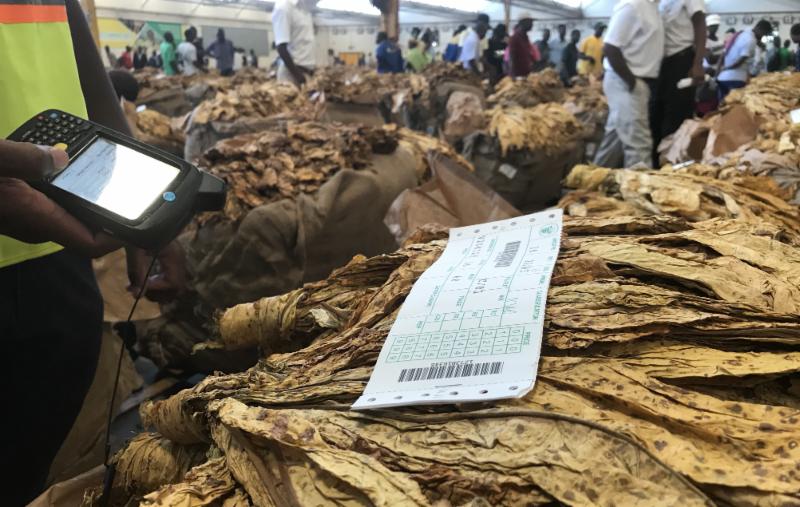
Buyers consider the price of leaf in this file photo of a Zimbabwean tobacco market. (Photo courtesy of TIMB Zimbabwe.)


Fifty percent more tobacco farmers in Zimbabwe this year--Farmers have increased the area in flue-cured this year, and there is hope of surpassing last year's record volume of 252 million kilograms. But it is no sure thing: Very dry conditions are being predicted. According to government statistics through the end of last year, 168,735 farmers had registered to grow tobacco, an increase of almost half when compared to the 113,530 farmers who registered in the previous season.There could be some more. Note: Harvest and curing has begun in Zimbabwe, and marketing will likely start in March.


EDITOR'S NOTE:This is the January II issue of Tobacco Farmer Newsletter. If you would like to receive the newsletter regularly or if you need to change an address, please email me at chrisbickers@gmail.com. For more information, call me at 919 789 4631

A highly aggressive new species of root-knot nematode poses a threat to tobacco in the flue-cured states. The species known as Meloidogyne enterolobii or guava root-knot nema-todes. "It is very successful at causing infection, with high rates of infection on the roots of host plants, and it causes more severe galling on host plants than other nematodes," says Lindsey Thiessen, North Carolina Extension plant pathologist. 

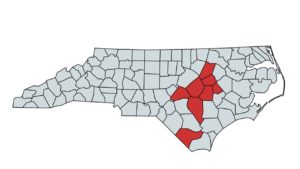
Guava root-knot has been identified in eight counties in N.C. (see map). It has a wide host range, spreads rapidly, reproduces swiftly, and breaks down any available resistance to other nematode species. But it's very fast reproduction may be the
Guava root knot nematode distribution in North Carolina
biggest problem it poses for farmers. Yield losses can be substantial, and it can pull nutrients away from foliage, causing wilting and reductions in quality.

Sweet potatoes are also vulnerable to guava root-knot nematode. In October, the N.C. Department of Agriculture quarantined sweet potato seed or sweet potato plants with or without roots produced anywhere in the state, because of the occurrence of guava root-knot.

A new organic nematicide chemical could help you control nematodes and suppress wireworms, says the manufacturer, Marrone Bio. Majestene BioNematicide is derived from a single microbe and controls root-knot, dagger, burrowing, sting, cyst and other nematodes on tobacco. Majestene offers an advantage: It allows more flexibility than some existing nematicides because there is no waiting period after application. The first application of Majestene might go in-furrow in the transplant water. "Then apply again if needed at first cultivation," says Hal Blackmore, southeast territorialsales manager for Marrone Bio. "If needed, they could apply again at layby." To find out more about Majestene, call 904 570 0041.

Leaving tobacco: Don Fowlkes, who has since 2016 has been an agronomist with Burley Stabilization Corporation in Greeneville, Tn., left at the beginning of this year to become the Senior Agronomist with Bluhen Botanicals in Knoxville, Tn., a CBD/hemp purchasing and processing company. Before joining BSC, he was Extension agronomist for the University of Tennessee from 1985 to 2001 and agronomy manager for PMI from 2001 to 2016. There are opportunities for leaf growers in CBD/hemp, observes Fowlkes. "Our tobacco farmers [in East Tennessee] are well positioned to grow hemp, and I want to help them participate in this emerging market," he says.
Referendum on export assessments: Flue-cured growers in North Carolina will get the chance to vote on whether to continue an assessment to fund grower export promotion programs. The assessment will be no more than one fifth of one cent per pound. Votes can be cast at local Extension Service offices.

In passing: Kirk Wayne (right), the longtime leader of Tobacco Associates, passed on earlier this month. He dedicated his long career to promoting exports of flue-cured tobacco, spending most of his time in recent years to providing what you might call "customer assistance" to potential importers of American leaf. In addition, he was a very astute observer of the international tobacco economy and served as a source of information for the editor of this publication many times. He will be missed.

DATES TO REMEMBER
  • January 30, 9 a.m. to 4 p.m. Southern Farm Show. N.C. State Fairgrounds, Raleigh, N.C.
  • January 31, 9 a.m. to 4 p.m. Southern Farm Show. N.C. State Fairgrounds, Raleigh, N.C. 
  • February 1, 9 a.m. to 4 p.m. Southern Farm Show. N.C. State Fairgrounds, Raleigh, N.C.
  • February 1, 10 a.m.--1 p.m. Tobacco Growers Association of N.C. Annual Meeting, Holshouser Building, N.C. State Fairgrounds, Raleigh, N.C. (in conjunction with Southern Farm Show).
  • February 5, 8 a.m.-1:30 p.m. CST. TN-KY Tobacco Expo. Robertson County Fair, 4635 Highway 41 N, Springfield, Tn.

Wednesday, January 9, 2019

COULD YOU MAKE MONEY GROWING LOW-NICOTINE LEAF?

Low-nicotine tobacco plants grow in a seed propagation program in an unidentified field somewhere in Central America. Photo: 22nd Century Group.

It would seem a tall order, but the land-grant universities in the tobacco states are looking for possible strategies that might allow you to address the proposed Federal standards requiring cigarettes with much less nicotine. Some production practices, such as reduced nitrogen fertility, might help. But Matthew Vann, N.C. Extension tobacco specialist, said at the recent N.C. Tobacco Day that variety development will be a necessity for there to be any hope of reaching the standards proposed by FDA. And there is not much to work with just yet.

But one existing variety has very low nicotine levels, says Vann. LAFC 53 is a flue-cured variety that has been used in research in the past but never by farmers. It currently does not meet the minimum standards required for variety certification, so it has never been commercially available. That could certainly change. But unfortunately, LAFC 53 consistently performs poorly in yield and quality. Manipulation in breeding could conceivably produce an acceptable cultivar in time, says Vann.

In the private sector, one company already markets cigarettes it says are low enough in nicotine to meet the new standards: These cigarettes are made using its own patented low-nicotine varieties. 22nd Century Group, headquartered in New York State with a factory in Mocksville, N.C., is currently seeking Modified Risk status from the U.S. Food and Drug Administration for its VLN cigarettes. 22nd Century has sold these cigarettes primarily as smoking cessation tools.

But where does 22nd Century get its low-nicotine leaf now? TFN has not been able to ascertain how 22nd Century's tobacco is being grown. But the company issued a statement three years ago saying a propagation program developed in an unspecified location in Central America (see photo) had been successful enough "to allow 22nd Century to greatly expand its tobacco leaf-growing programs in both the United States and in Central America." Watch for more details in future issues of TFN.

A billion pounds plus in Brazil? The flue-cured crop in Brazil is well into harvest. Two leaf dealers doing business there estimate production at 600 and 610 million kilograms respectively. That suggests a crop of around 1.33 billion pounds, which would be a little more than 2018 and about the same as 2017.

Brazilian burley is estimated at 143 million pounds, about the same as last season and about 20 million pounds less than the big year of 2017.

Western Kentucky didn't get as much rain as the Bluegrass of Kentucky and certainly not as much as eastern North Carolina. But it got enough to negatively affect yields, says Rod Kuegel, who grows burley and dark tobacco near Owensboro, Ky. The configuration of the land there makes intense rains a real problem. "We have flat fields in this area, and it is hard to get six inches of rain off of a flat field, "Kuegel says.

First ever bush hogging: As a result, he experienced an event that he is not happy to remember. "I had to bush hog eight acres of burley because of the flooding. It was the first time that I have mowed down tobacco in my life."

Reduced tillage may help: Farmers are beginning to grow quite a bit of no-till tobacco here, and the problems with draining flooded fields this year may hasten that trend...Dark tobacco is performing better now in western Kentucky than burley, he adds.

Tobacco may be losing its place in Kentucky agriculture, says Kuegel. "There is a lot of disappointment among farmers that we are still producing tobacco even though the price hasn't kept pace," he says. "I personally know many farmers who aren't going to grow burley in 2019. But dark growers seem determined to grow the type for at least another season."

In southern Ohio,  it rained so much  in 2018 that the area was left looking like a swamp, says David Dugan, Extension Educator in Adams County, Ohio.  One farmer located just north of the Ohio River near Adams and Brown County reported a total for the year of 74.67 inches just before midnight on December 31. Much of Ohio's burley crop was damaged. "In some cases, farmers said that they went ahead and barned tobacco that they should have just walked away from." Dugan said. He stands by his earlier estimate of around 50 percent loss in production for the state.

GAP GROWER TRAINING EVENTS
Check with your local Extension Service office for further details. All meetings listed here are free and presented in English. Note to readers: Corrections welcome.
January 8, 9 a.m. Winston Salem, N.C.
January 9, 9 a.m. Rocky Mount, N.C.
January 10, 9 a.m. Carthage, N.C.
January 11, 9 a.m. Smithfield, N.C.
January 15, 9 a.m. Yanceyville, N.C.
January 15, 10 a.m. Nashville, Ga 
January 15, 9 a.m. Blackstone, Va.
January 15, 5 p.m. Mayfield, Ky.
January 15, 5 p.m. Albany, Ky.
January 16, 9 a.m. Williamston, N.C.
January 17, 8:30 a.m. Oxford, N.C.
January 17, 4 p.m. South Chatham, Va..
January 18, 9 a.m. Lumberton, N.C.
January 22, 9 a.m. Lillington, N.C.
January 22, 5:30 p.m. Dixon, Ky.
January 23, 9 a.m. Yadkinville, N.C.
January 23, 9 a.m. Dover, Tn.
January 23, 4 p.m. South Hill, Va.
January 24, 9 a.m. Clinton, N.C.
January 24, 10 a.m. Sutherlin, Va.
January 25, 8 a.m. Kinston, N.C.
January 28, 9 a.m. Calhoun, Ky.
January 29, 9 a.m. Goldsboro, N.C.
January 31, 6 p.m. Lancaster, Ky.
February 1, 1:30 p.m. Raleigh, N.C.
February 5, 10:30 a.m. Springfield, Tn.
February 7, 6 p.m. Cynthiana, Ky.
February 8, 9 a.m. New Castle, Ky.
February 8, 1 p.m. Shelbyville, Ky
February 11, 1 p.m. Scottsburg, In.
February 11, 6 p.m. Vevay, In.
February 12, 6 p.m. Cadiz, Ky.
February 19, 4:30 p.m. Franklin, Ky.
February 21, 10 a.m. Fountain City, In.
February 25, 5 p.m. Clarksville, Tn.
February 28, 1 p.m. West Union, Ohio.
February 28, 6 p.m. Maysville, Ky.
March 1, 1 p.m. Paoli, In.
March 4, 6 p.m. Gallipolis, Ohio.
March 5, 1 p.m. West Union, Ohio.
March 5, 6:30 p.m. Georgetown, Ohio.
March 6, 9 a.m. Georgetown, Ohio.
March 11, 10 a.m. Tifton, Ga.
March 12,10 a.m. Marion, S.C.
March 19, 6 p.m. Glasgow, Ky.

DATES TO REMEMBER
  • January 30, 9 a.m. to 4 p.m. Southern Farm Show. N.C. State Fairgrounds, Raleigh, N.C.
  • January 31, 9 a.m. to 4 p.m. Southern Farm Show. N.C. State Fairgrounds, Raleigh, N.C. 
  • February 1, 9 a.m. to 4 p.m. Southern Farm Show. N.C. State Fairgrounds, Raleigh, N.C.
  • February 1, 10 a.m.--1 p.m. Tobacco Growers Association of N.C. Annual Meeting, Holshouser Building, N.C. State Fairgrounds, Raleigh, N.C. (in conjunction with Southern Farm Show).
  • February 5, 8 a.m.-1:30 p.m. CST. TN-KY Tobacco Expo. Robertson County Fair, 4635 Highway 41 N, Springfield, Tn.


Thursday, January 3, 2019

THE PROSPECTS FOR PLANTING IN 2019

Boxed tobacco is loaded in a Burley Stabilization Corporation warehouse in Springfield, Tn.

They aren't very promising for burley, say Extension economists at the University of Kentucky. Tumbling U.S. demand will likely lead to additional reductions in contract volume for 2019. The value of Kentucky tobacco production (all types) may struggle to exceed $300 million in 2018 compared to the average of $366 million over the past 10 years.

Effect on farmers?Look for continued concentration in the number of burley farms growing tobacco in 2019, given the current outlook, labor and regulatory challenges, changes in the products demand-ed and tighter margins.

Reduced contracting  coupled with an extremely poor growing season resulted in a significantly lower volume of burley. Beltwide, marketings in 2018  may struggle to exceed 100 million pounds, versus 140 milllion pounds in 2017.
 
To make the situation worse, even though global demand for burley is declining, world production was up by 15 percent last year. Overall demand for U.S. burley may only total around 100 to 110 million pounds given declines of four to five percent in domestic cigarette sales and five to seven percent in burley leaf exports. Cigarette manufacturers continue to invest in new reduced risk tobacco products, and these products likely contain limited amounts of U.S. leaf.
 
And the market for dark tobacco may finally be declining. After two decades of growth, sales of snuff show signs of leveling off, which can be expected to hinder dark tobacco demand.
 
Don't use plastic tarps when you transport tobacco, says Don Fowlkes, agronomist for the Burley Stabilization Corporation. "These tarps easily fray and become non-tobacco-related material in or on your tobacco," he says. "Farm supply stores carry canvas tarps that do not pose the same level of risk." Canvas tarps also last longer and protect better than plastic tarps, he adds.
 
Record low flue-cured production? A reduction in contract offerings for flue-cured is considered all but certain by market observers, and the Executive Vice President of the N.C tobacco growers association, Graham Boyd, predicted out right at N.C. Tobacco Day that the 2019 crop will be the smallest American flue-cured crop since records were kept. The 2018 burley crop is believed to have been the smallest on record.
 
More opposition to menthol ban. Senator Thom Tillis (R-N.C.), joined a number of tobacco state leaders objecting to FDA's proposed ban on menthol in cigarettes. "The FDA must remain committed to using a science-based regulatory framework in order to effectively reduce risks and minimize collateral damage that would ultimately limit options available to adults seeking an alternative to smoking," he said.
 
 
GAP GROWER TRAINING EVENTS
Check with your local Extension Service office for further details.
All meetings listed here are free and presented in English.
 
January 7, 9 a.m. Wilson, N.C.
January 8, 9 a.m. Winston Salem, N.C.
January 9, 9 a.m. Rocky Mount, N.C.
January 10, 9 a.m. Carthage, N.C.
January 11, 9 a.m. Smithfield, N.C.
January 15, 9 a.m. Yanceyville, N.C.
January 15, 9 a.m. Blackstone, Va.
January 15, 5 p.m. Mayfield, Ky.
January 15, 5 p.m. Albany, Ky.
January 16, 9 a.m. Williamston, N.C.
January 17, 8:30 a.m. Oxford, N.C.
January 17, 4 p.m. South Chatham, Va..
January 18, 9 a.m. Lumberton, N.C.
January 22, 9 a.m. Lillington, N.C.
January 22, 5:30 p.m. Dixon, Ky.
January 23, 9 a.m. Yadkinville, N.C.
January 23, 9 a.m. Dover, Tn.
January 23, 4 p.m. South Hill, Va.
January 24, 9 a.m. Clinton, N.C.
January 24, 10 a.m. Sutherlin, Va.
January 25, 8 a.m. Kinston, N.C.
January 28, 9 a.m. Calhoun, Ky.
January 29, 9 a.m. Goldsboro, N.C.
January 31, 6 p.m. Lancaster, Ky.
February 1, 1:30 p.m. Raleigh, N.C.
February 5, 10:30 a.m. Springfield, Tn.
February 7, 6 p.m. Cynthiana, Ky.
February 8, 9 a.m. New Castle, Ky.
February 8, 1 p.m. Shelbyville, Ky
February 11 1 p.m. Scottsburg, In.
February 11, 6 p.m. Vevay, In.
February 12, 6 p.m. Cadiz, Ky.
February 19, 4:30 p.m. Franklin, Ky.
February 25, 5 p.m. Clarksville, Tn.
February 28, 6 p.m. Maysville, Ky.
March 1, 1 p.m. Paoli, In.
March 19, 6 p.m. Glasgow, Ky.
 
 
DATES TO REMEMBER
  • January 30, 9 a.m. to 4 p.m. Southern Farm Show. N.C. State Fairgrounds, Raleigh, N.C.
  • January 31, 9 a.m. to 4 p.m. Southern Farm Show. N.C. State Fairgrounds, Raleigh, N.C. 
  • February 1, 9 a.m. to 4 p.m. Southern Farm Show. N.C. State Fairgrounds, Raleigh, N.C.
  • February 1, 10 a.m.--1 p.m. Tobacco Growers Association of N.C. Annual Meeting, Holshouser Building, N.C. State Fairgrounds, Raleigh, N.C. (in conjunction with Southern Farm Show).
  • February 5, 8 a.m.-1:30 p.m. CST. TN-KY Tobacco Expo. Robertson County Fair, 4635 Highway 41 N, Springfield, Tn.

Wednesday, December 19, 2018

Will the short U.S. crops of 2018 lead to aggressive buying?


Who is going to buy our tobacco? Boxes and hogsheads of leaf in a Universal Leaf warehouse at the company's facility in Nashville, N.C.. await shipping earlier this year.


The size of the American burley crop is still up for debate, but it seems likely that at least some customers will not get as much as they originally wanted. "I said back at the beginning of the season that we would probably need 100 to 110 million pounds to meet the demand," says Will Snell, Kentucky Extension tobacco economist. "Now, I don't know if we are going to have that much. However, now I'm not sure the short crop will warrant aggressive buying by the companies given sluggish demand."

The crop in the Bluegrass was dismal. "Many farmers produced a yield of less than 2,000 pounds," says Snell. "You can't justify labor and oth-er costs with that low of a yield."

Our best hope for export sales? South-east Asia, said Blake Brown, N.C. Exten-sion economist, at the recent N.C. To-bacco Day. "The As-ian slice [of world cigarette sales] is huge," he says. Although sales there are mainly low-cost brands, the market for premium cigarettes is growing. In the short term, the chances for increased exports are largely dependent on resolution of the trade conflict with China. 

Two recognized by N.C. State: Parker Phillips, sales representative for Fair Products, and Richard Reich, retired Assistant N.C. Commissioner of Agriculture, each were awarded the "Tobacco Great" award at N.C. Tobacco Day. The award, conferred by 
Phillips
the N.C. State agriculture faculty, is given to members of the tobacco family who have made significant contributions to the industry. Editor's Note: Watch for further coverage of N.C. Tobacco Day in the next issue of Tobacco Farmer Newsletter.

Menthol in trouble? The Food and Drug Administration announced it will seek a ban on menthol products. The Congressional leadership in tobacco states cried foul. N. C. Senator Richard Burr, "It is troubling, however, that an Administration that pledges to put America first is targeting legal, American-made products instead of focusing its attention on states that flout federal drug laws. If the United States continues down
Reich
this path, we will be following in Canada's footsteps, banning menthol but legalizing recreational drug use."

Despite hurricanes in the east and long hard late-season rains in the west, much of 2018 crop is reportedly of good quality--or at least better than expected. "What we have been buying so far has been a good, useable style of tobacco," says Don Fowlkes, agronomist with the Burley Stabilization Corporation in Greeneville, Tn. "This looks like one of the better-colored burley crops we have had in some time." There is a significant amount of dark colored leaf, with much of it getting FR grades, he says. "But we also have some black leaf that suffered houseburn," he adds.

Yields are another matter. The extended excessive rains that seemed to fall everywhere in the Tennessee tobacco-growing area drastically reduced production on many farms, says Fowlkes.

In the Deep South, it was a very rainy season, and in fact the rains are still falling. "We still have cotton and peanuts in the field," says J. Michael Moore, Georgia Extension tobacco specialist. But Georgia and Florida suffered no effects from Florence and Michael since they arrived right after the crops were finished. Therewere a few cases where leaf that was already harvested in barns or in storage was damaged.

The rains were enough to reduce yields in Georgia and Florida, and it was a thin to light crop. "But many buyers have said that they were pleased with the quality," Moore says.

Don't fall back on black shank:You can expect Georgia-Florida growers to use the full arsenal of weapons available for black shank control, says Moore. Besides rotation and resistant varieties, he predicts that a chemical program of Orondis in the transplant water, Presidio at first plowing and Ridomil at layby will be frequently used.

Record-setting crop in Zimbabwe: Tobacco farmers in Zimbabwe produced a record crop 2018 of 556 million pounds, according to the Chinese press agency Xinhua. The country's previous production record was 520 million pounds, produced in 2000. The 2018 production was also 34 percent higher than the season before.

Hats off to Universal for lasting 100 years in an industry as tough as tobacco. In 1918, the Virginia tobacco merchant Jacquelin P. Taylor and five other tobacco merchants consolidated to form Universal Leaf Tobacco Company, making this year its centennial.

DATES TO REMEMBER

  • January 30, 9 a.m. to 4 p.m. Southern Farm Show. N.C. State Fairgrounds, Raleigh, N.C.
  • January 31, 9 a.m. to 4 p.m. Southern Farm Show. N.C. State Fairgrounds, Raleigh, N.C. 
  • February 1, 9 a.m. to 4 p.m. Southern Farm Show. N.C. State Fairgrounds, Raleigh, N.C.
  • February 1, 10 a.m. to 1 p.m. Tobacco Growers Association of N.C. Annual Meeting, Holshouser Building, N.C. State Fairgrounds, Raleigh, N.C. (in conjunction with Southern Farm Show).


Sunday, November 25, 2018

THE SMALLEST U.S. BURLEY CROP IN HISTORY?

Hard to believe now, but this good-looking burley--photographed on the Kentucky burley tour in mid-August--was part of the smallest burley crops in U.S. history. But the ax was just waiting to fall when this picture was taken, in the form of inopportune rains in September that just went on and on.

The burley crop just coming on the market has been projected at 90 million pounds, says Daniel Green, chief operating officer, Burley Stabilization Corporation. The numbers may end up a little higher by the end of the delivery season, but Green says it will not go higher than 100 million lbs. Either volume would be the smallest burley crop since records have been kept.

The shortfall resulted in part from the substantial cutbacks in plantings last spring (20 percent according to USDA), but late-season rains were the big factor. Some fields were drowned out by these rains, and leaf drop was a problem too. NOTE: Burley deliveries will begin in earnest next week.

Despite yield losses, the quality of this burley crop is decent, says Green, similar to the last two crops. "You could call this crop 'low in volume but acceptable in quality'," he says. "But much of the leaf is thin. There isn't a lot of the good-bodied redder styles that buyers are looking for."

Considering the circumstances, the sales season at Big M Warehouse in Wilson, N.C. (all flue-cured), went fairly well, says owner Mann Mullen. "We sold some tobacco for more than $2 a pound," he says. "But the practical top was probably more like $1.88." One big surprise: Some scrap tobacco sold for $.35 to $.75 a pound. And those prices held toward the end, when leaf prices fell off," he says. That was one of several indications that the market has changed its preferences, but Mann can't figure out what the changes are. "What is quality in flue-cured? I used to know but I don't know any more," he says. Mann is very apprehensive about next season, but for whatever it is worth, all tobacco offered at his warehouse found a buyer. There will be one more sale on November 28.

AOI's Farmville (N.C.) plant will no longer process leaf. Alliance One is moving all its U.S. tobacco processing to its Wilson, N.C., facility. AOI's processing operations in Farmville, N.C., will be relocated (tentatively) by the beginning of the 2019 season. Some processing jobs will shift from Farmville to Wilson, and the  Farmville facility will be "repurposed" for storage and special projects. But a workforce reduction in Farmville is nevertheless expected. "Consolidating our U.S. tobacco processing operations in Wilson is designed to maximize efficiency and allows us to continue to competitively deliver value-added products and services to our customers," said Pieter Sikkel, c.e.o. of AOI's parent cor-poration Pyxus International. The move was caused in part by new and increased tariffs on U.S. tobacco, declining export demand and the strong U.S. dollar, a statement by the company said.
 
Sign of the times: The American Tobacco Factory in Reidsville, N.C., is about to become vacant. You would remember it if you'd ever seen it; it has an enormous brick smokestack out front with large letters spelling out "Lucky Strike." With initial construction taking place in 1892, it was used to make cigarettes by American Tobacco Company for over 100 years. It was bought and owned briefly by Brown & Williamson, then sold to Commonwealth in 1997, which also used it to make cigarettes. In 2007, Imperial Tobacco, purchased Com-monwealth Brands and the factory along with it, operating it first as Imperial, then as its subsidiary ITG Brands. With its Greensboro factory (which formerly belonged to Lorillard). ITG just doesn't have enough work to keep Reidsville going. Maybe some smaller company will take a chance on it--I am sure it could be acquired at a very reasonable price. 
 
In other leaf news:

Hot market in Malawi: As reported in the last issue of Tobacco Farmer Newsletter. Malawi's burley market (which ended in August) enjoyed much more sales volume than expected. It has now been learned that part of that excess--roughly 30 million pounds--may have been tobacco from growers in the neighboring countries of Mozambique and Tanzania, indicating the strong market in Malawi late in the season.
 
Hurricane spares tobacco in Cuba: Hurricane Michael touched Pinar Del Rio, the western end of Cuba and its leading cigar-producing province. But damage to the tobacco crop--which occurred mainly on October 8--was limited and can be managed, said the president of the leading cigarette manufacturer, Justo Luis Fuentes. In the newspaper La Prensa, Fuentes said, "We have the necessary resources to repair the damaged crops." According to preliminary reports, about 60,000 nurseries were lost, along with some planted hectares and 12 tobacco barns. Fortunately, this was very early in the season not much of the crop was in the field.
Mark your calendar: N.C. Tobacco Day, December 6 8:30 a.m.-12 p.m. Johnston County Extension Center, Smithfield, N.C. Lunch will follow the program.


Tuesday, November 6, 2018

FLUE-CURED MARKET COMING TO AN END


Selling flue-cured this year got more complicated after Hurricane Florence, but there is reason to think buyers may not have been able to fill their orders from the storm-ravaged crop. In happier times (photo), buyers at the American Tobacco Exchange warehouse in Wilson, N.C., had more to choose from at the sale on August 29. Al Whitfield (middle left) was the auctioneer and Tommy Faulkner (right) led the sale.

Auction warehouses are operating this week and next week, maybe longer if there is a demand. Sales volumes are not available yet, but Hurricane Florence definitely lead to a reduction. But the quality loss has been the bigger problem. "We have had so much dark leaf since the storm," says Tommy Faulkner, auction manager at American Tobacco Exchange (ATE) in Wilson, N.C. "This was a difficult crop for everybody."

Prices have ranged all across the scale, says Faulkner. "We have sold at 25 cents a pound to $1.85 a pound and every price in between." A meaningful average price will be hard to obtain since Florence arrived just as the leaf tobacco was coming to market. "It is hard o compare the prices of lugs and cutters to the price of leaf."

Buyers appear to think this crop will have a use somewhere. They bought ii all. "All the tobacco we offered found a home at some price," Faulkner says.

Burley harvest in Kentucky ended in the first two weeks of October. Production was probably reduced 20 to percent by rains in September. But the quality held up, says Bob Pearce, Kentucky Extension tobacco specialist, University of Kentucky. "There has been a little houseburn," he says. "The color looks pretty good."

Sanitizing greenhouse trays with steam at 176 degrees has proven very effective as a means of tray sanitation, says Matthew Vann, N.C. Extension tobacco specialist clear. Several self-contained units are available on the market, and information you can use to build  your own units can be obtained from N.C. State. (Check with your county agent.) There is very little benefit to the relatively old-fashioned method of washing with bleach or other chlorine-based ma-terials and, in fact, there is more potential for harm than good, Vann says. "You need to pres-sure-wash trays before steaming to remove plant and media debris," he says.

Only a few of the new tray steamers have been acquired by farmers in Kentucky, says Pearce. "But I think growers could get some benefit from using them, he added.

There can be no doubt: Tobacco companies are looking for ripe to overripe flue-cured upper-stalk leaf. Lemon style is just not in vogue any more, says Vann. "To produce overripe tips, be sure to fertilize properly, concentrating on applying enough nitrogen. Then, when you think your crop is ready to harvest, give it 10 or 15 more days." We may eventually be selling to a niche market for dead ripe tips, since no one else in the world can produce this type of leaf, he adds.

Flue harvest ended in North Carolina before October 15, says Vann. The Eastern Belt was essentially finished by the beginning of thee month and the Old Belt wrapped up right as some of the light frosts arrived a couple weeks back. 

Bad news from a major competitor: Burley revenue in Malawi, our strongest competitor for the world burley market, rose 60 percent in this year's marketing season, which ended in August. In addition, reliable reports from dealers in the United States indicate that buyers are searching out and buying uncommitted burley stocks in Malawi wherever they can. A reasonable assumption: The market thinks that U.S. burley can't meet industry needs when it comes to market in a few weeks and that Malawi is the best substitute.

Final word on the 2018 crop: The USDA's latest Crop Report--the last that will appear in calendar 2018--confirmed the stunning losses in yield late in the season to the hurricane in North Carolina and extreme rain damage in Kentuc-ky. Flue-cured production in the current crop is projected to total 342 million pounds, the report says, down 26 percent from 2017. Bur-ley tobacco production is expected to total nearly 113 million pounds, down about 30 percent from last year.
Following are projections by type, plus projections by state for flue-cured and burley.
  • Flue-cured: North Carolina--252.8 million pounds, down 29.5 percent. Georgia    --22.5 million pounds, down 14.2 percent. South Carolina--20.4 million pounds, 19 percent. Virginia--46.2 million pounds, down 9.2 percent.
  • Burley: Kentucky--90.1 million pounds, down 30.2 percent. Tennessee--10.2 million pounds, down 43.3 percent. Pennsylvania--9.6 million pounds, down 7.2 percent. Virginia--1.7 million pounds, down 22.7 percent. North Carolina--1.36 million pounds, down 5.5 percent.
  • Fire-cured: 57.7 million pounds, down 14.3 percent.
  • Southern Maryland (Pennsylvania): 3.22 million pounds, down 25.4 percent.
  • Dark air-cured: 26.44 million pounds, up 30.1 percent.
  • Pennsylvania Seedleaf: 5.52 million pounds, up 27.7 percent.
  • Total U.S. (all types): 548 million pounds, down 23 percent from 2017.
Mark your calendar: N.C. Tobacco Day, December 6, 8:30 a.m. - 12 p.m. Johnston County Extension Center, Smithfield, N.C. Lunch will follow the program.

ADVERTISING