Friday, July 10, 2020

USDA PROJECTS FLUE-CURED PRODUCTION WILL FALL 22%

One of the last: A grower wraps up burley transplanting on his farm near Ripley, Ohio.


Flue-cured production for all U.S. states is forecast at 231 million pounds, down 22 percent from 2019, according to USDA's July Crop Production report. Acreage at 120,500 acres is 19 percent below last year. Yield for the 2020 crop year is forecast at 1,919 pounds per acre, 71 pounds below last year. Once again, if these projections are realized, this will be the lowest flue-cured tobacco harvested acreage and production on record. Among the individual states:
  • NORTH CAROLINA: 174.8 million pounds, down 25 percent from 2019, on 92,000 acres, down 25,000 acres from 2019. Yield is projected at 1,900 pounds per acre, down slightly from 2019.    
  • VIRGINIA: 28 million pounds, down one percent from 2019, on 14,000 acres, down 1,000 acres from 2019. Yield is projected at 2,000 pounds per care, up 100 pounds per acre from 2019.
  • GEORGIA: 16.5 million pounds, down 12 percent from 2019, on 7,500 acres, 1,500 fewer acres than 2019. Yield is projected at 2,200 pounds per acre, slightly higher than 2019.
  • SOUTH CAROLINA: 11.9 million pounds, down 24 percent from 2019, on 7,000 acres, down 1,300 acres from 2019. Yield is projected at 1,700 pounds per acre, down 200 pounds per acre from 2019.
  • FLORIDA: USDA did not estimate production for the Sunshine State and has not for several years. But one reliable estimate of planting puts Florida acreage at 1,000.
First projections for other tobacco states will appear in future editions of USDA's Crop Production.
 
Suit against Lexington co-op settled: All parties involved a lawsuit seeking the dissolution of the Burley Tobacco Growers Cooperative Association have reached an agreement on a partial settlement. The terms include the liquidation of the Co-op's assets and distribution of net proceeds equally among members (those active in any crop year from 2015 through 2019) after payment of administrative costs, and fees and expenses of the plaintiffs' attorneys. The first distribution should occur before the end of 2020. The dissolution of the Co-op will be managed by a six-member dissolution committee made up of Penny Greathouse, Mitch Haynes and Gregg Craddock, who are Cp-op members involved in the litigation, and Al Pedigo, Eddie Warren and Donald Mitchell, who are Co-op directors. $1.5 million of the Co-op's assets will be designated for the creation of a new agricultural-related non-profit entity whose mission will include:
  • Serving as liaison for tobacco growers with leaf dealers and tobacco purchasers;
  • Advocating for producers/growers and land-owners in production of tobacco;
  • Providing services and support for education and research beneficial to growers of all types of tobacco.
A hearing seeking preliminary approval has been set for July 29. Detailed notices will then be sent to past and present members, and a settlement website will be established. Watch for further details as they arise.
 
Who will represent growers in Kentucky until the new association is established? "We want burley growers to know they still have an organization they can reach out to as issues arise," said Darrell Varner, president of the Council for Burley Tobacco. "We encourage them to check out our website at  www. councilforburleytobacco.com for up-to-date information on all burley issues."
 
Tobacco is fading away in East Tennessee: As far as Bennie Davis of Sur-goinsville, Tn., can tell, only one acre of burley has been planted this year in his home county of Hawkins. And that acre is being grown on his upper east Tennessee farm by his 17-year-old grandson as a school project. As recently as a year ago, there were three adult tobacco grow-ers in the county (see TFN November II 2020), but they have all given up on the crop. Reason? The price offered in recent years has been too low to allow a profit under the growing conditions of the Blue Ridge. "You can't afford to grow it at the current price if you have to hire any labor at all," says Davis. "You lose money."
 
On the bright side, Davis' grandson's one-acre patch is looking good now, even though it got off to a late start. "It should have been up already when he decided to plant it," Davis says. Fortunately, the weather was good after setting.
 
Kentucky burley setting was probably completed this week, says USDA. Steve Pratt, general manager of the Burley Tobacco Growers Cooperative Association in Lexington, said, "From what I have seen, the crop looks good and has good potential." Transplanting was slowed by heavy rains early on. "But once it was in the field, the weather has been better. Farmers have been able to plant all the acres they wanted to."

REPORT FROM OVERSEAS
 
Brazil--Nicotine levels high. Harvesting of the 2020 flue-cured Virginia crop has been completed, according to a report from Star Tobacco, and expected crop size is 550 million kilos. Production was negatively affected by drought, and nicotine levels appear to fall around five percent. To decrease that level in blends, buyers plan to use most Brazilian lugs and cutters in leaf grades. A short supply of filler grades for the export market can be expected.
 
Zimbabwe--As of July 1, Zimbabwe farmers had sold 116 million kilograms of tobacco, substantially more than at the same point in the 2019 sales, according to media reports. Prices were roughly 30 percent higher. Flue-cured Virginia production has been estimated at 225 million kilos in 2020 which is 13 percent lower than the previous year, according to a report from Star Tobacco. The irrigated crop is down in volume compared to recent years, but the dryland crop has exceeded the earlier forecast yields. As a result, the overall production level of commercially grown flue-cured tobacco should be slightly less than they were than in 2019.

Malawi--The growing season here was characterized by heavy rainfall, according to a report from Star Tobacco. Rain that extended from February and into March left crop stands slightly uneven, and the leaf is thinner than the previous year. Expected burley crop size is 120 million kilos, 15 percent lower than 2019

Wednesday, July 1, 2020

TRANSPLANTING ENDS AS HARVEST KICKS OFF IN GEORGIA & FLORIDA

Nearing the end: A Kentucky farmer wraps up setting. 
Transplanting will probably be complete by the weekend, in Kentucky, if not sooner, says Bob Pearce, Kentucky Extension tobacco specialist. "Most of the crop has been in the ground for two weeks and looks good." Al Pedigo of Scottsville, Scottsville, Ky., hoped to finish transplanting on Saturday the 27th. "It's definitely been a late crop so far," he told TFN.
 
That was largely due to rains. And the dark types in western Kentucky and Tennessee were affected by the same weather. Andy Bailey, Extension dark tobacco specialist, thinks about 98 percent of the dark tobacco has been set out and the rest will be by the weekend. Normally it would be complete by now. "This could prove to be a problem for dark tobacco growers who are trying to double crop their barns," he says.
 
Mountain burley lags: In Virginia, planting of burley was completed last week. In Tennessee, all but five percent of the crop was reportedly set. But in North Carolina, 18 percent of the state's burley crop was yet to be transplanted. In the N.C. Mountains, rainfall near average and temperatures slightly lower with cloudy conditions for most of the period in Jackson and Swain counties.
 
Coastal Plain heats up: In North Carolina, farmers in the east went from wet and cool weather to hot and dry weather very quickly. "Our crops could use a little shower of rain in the evenings at this time," said a USDA source covering Franklin, Halifax and Nash counties. Soils have reportedly dried out in Johnston County south of Raleigh due to very little rainfall and windy and hot conditions. Near the ocean, in Craven County, the lack of rainfall has allowed field work, but crops are still behind normal growth stages. Farmers have been forced to make difficult decisions regarding management priorities--adjust for nutrient loss, manage weeds or remedially treat for tobacco budworm? In South Carolina, crops benefited from frequent rainfall last week. However, some areas experienced ponding in fields. Topping was going on full speed, with 31 percent of the crop topped
 
Old Belt makes adjustments: North of Raleigh, flue-cured growers in Granville County are trying to apply nitrogen without causing the leaf to stay green into the fall, another USDA source says. Growing conditions have been good, but some foliar diseases are starting to show up. In Virginia, fieldwork had been slowed by wet conditions two weeks ago, with some fields flooded. But the weather dried and allowed growers to get in the fields. To "leaching adjust" or "not to leaching adjust" was the big question. Transplanting was complete for flue-cured and nearly complete for fire-cured.

Deep South: Harvest will get going in earnest in Georgia and Florida next week, says J. Michael Moore, Georgia Extension tobacco specialist. Some may have taken place already. Some irrigation is going on, especially in Florida. "It has been very hot," Moore says. "The quality looks good, but the leaf is thin." Moore estimates that a little over 8,000 acres of flue-cured have been planted in Georgia and perhaps 1,000 acres in Florida.

Still another type of tobacco in the Black Patch? The same dealers who contracted with farmers to grow Connecticut broadleaf last year are now contracting for limited plantings of the Pennsylvania Type 41 tobacco in the dark tobacco areas of western Kentucky and Tennessee. It is primarily a cigar wrapper type like the Connecticut type but has some other uses. Type 41 may have a little higher yield potential than Connecticut, says Bailey. He believes there are a few hundred acres of Type 41 growing in the Black Patch now, along with a few thousand acres of Connecticut.
 
REPORT FROM OVERSEAS
 
Argentina's tobacco market was disrupted by the country's coronavirus lockdown. When it began in March, roughly a third of the flue-cured and virtually all of the burley in the country remained to be delivered. "Purchases of burley were just beginning when COVID-19 broke out," said José J. Aranda of the Cámara del Tabaco of Salta. "[The delays] and the slower pace of purchases has had a greater impact on the quality of burley leaves than flue-cured." As a result of the lockdown, points of sale experienced a shortage of cigarettes. "This, in turn, means cigarette sales are down." But the lockdown ended in early June and there is hope that its effects on growers will not be pronounced.
 
Names In The News: Mark Stewart has been named the new President of Drexel Chemical Company, replacing Ben Johnson, who is retiring.
 
ACREAGE PROJECTION FROM USDA SHOWS
FLUE-CURED DOWN 19%, BURLEY DOWN 10%

THIS JUST IN: USDA released its first estimate of 2020 tobacco plantings yesterday. Acreage was estimated at 149,300 acres, two percent below last year. Following are USDA's planting projections divided by types and by state for flue-cured and burley, with percentage change from 2019:

FLUE-CURED
  • North Carolina--92,000 acres, down 21 percent,
  • Virginia--14,000 acres, down six percent,
  • Georgia--7,500 acres, down 16.7 percent,
  • South Carolina--7,000 acres, down 15 percent,
  • United States -120,500 acres, down 19 percent 
BURLEY
  • Kentucky--36,000 acres, down 12 percent,
  • Pennsylvania--2,100 acres, down 16 percent,
  • Tennessee--4,700 acres, up 17 percent,
  • Virginia--400 acres, down 42 percent, and
  • North Carolina--300 acres, down 25 percent,
  • United States--43,500 acres, down 10 percent.
SOUTHERN MARYLAND (PENNSYLVANIA)--400 acres, down 60 percent.
FIRE-CURED--13,450 acres, down 17 percent.
DARK AIR-CURED--9,300 acres, down six percent.
PENNSYLVANIA SEEDLEAF--2,300 acres, up six percent.


Friday, June 12, 2020

IF LOWERSTALK LEAVES TURN YELLOW, IS A LEACHING ADJUSTMENT IN ORDER?


Nitrogen-deficient flue-cured plants in eastern North Carolina earlier this week. 
(Photo: NCSU).

Too late for lower stalk leaf? In some areas of North Carolina, a portion of the flue-cured shows an almost banana yellow color in the lower stalk, says Matthew Vann, N.C. Extension tobacco specialist. This indicates severe nitrogen deficiency.
A nitrogen leaching adjustment will probably do very little to help these severely deficient leaves on the very bottom of the plant but will greatly help those in the top, Vann says. "The demand for nitrogen in the newly developing upper-stalk leaves greatly outweighs the need for nitrogen in the older, lower-stalk leaves. When we see a nitrogen deficiency at this stage of growth, it's almost too late for the older leaves to rebound."


A crop may not "green up" from a nitrogen application immediately under the hot and dry conditions which N.C. had at the beginning of this week. "We need rain or irrigation to facilitate nitrogen movement from the soil solution into the root zone 
for uptake." 

Application methods
are also a factor. "If a crop has not yet reached the layby stage, then use con-ventional practices to deliver the nitrogen," Vann says. "If the crop is bigger than lay-by stage, then high clearance sprayers should be used to apply liquid nitrogen materials directly to the soil that have been mixed with water to ensure a high delivery volume." For more information on this subject, go to Tobacco Growers Information Portal (tobacco.ces.ncsu.edu).

A Report on the Crop: Field dispatches from USDA Crop Progress Report...

BURLEY
  • Kentucky--Farmers were able to make a good deal of headway in the fields last week thanks to accommodating weather. Planting progress had been stunted by consistent rain in the prior weeks. Tobacco setting quickened and at 54 percent sits just behind last year. 
  • Tennessee--Growers had a mostly rain-free week to set tobacco. An estimated 45 percent of the burley crop had been transplanted by June 8.
  • Virginia --Growers set out 72 percent of their burley by June 8. 
  • North Carolina- Nearly half the crop was set by June 8. Near normal rainfall with above normal temperatures were reported in the mountain counties where most of the state's burley is grown.
FLUE-CURED
The cold wet spring shocked much of the flue-cured, and growth recovery has been slow. But last week was finally normal. Tobacco growers are struggling to catch up. In Granville County, tobacco is doing well except in wet areas of fields and some where nitrogen was lost, it was reported. Organic fields especially are showing loss of color, and farmers are working to get additional nitrogen applied. In Craven County, rains continue to delay field work. Tobacco struggles with excess water in soils that are too wet to take any corrective action.


Webinar to replace N.C. field day: The Extension tobacco team in North Carolina will present a live webinar on the morning of July 16. It will replace the annual 
field day originally scheduled for that date but canceled due to coronavirus.
Extension ag economist Blake Brown will update the tobacco situation at the webinar and the rest of the team will join for a live question and answer segment. Video recordings of field trials will be available from July 13 on the NC Tobacco Portal. Other states may take the same approach. Watch this space for more details.

.
REPORT FROM OVERSEAS
South America: Looking for help, the tobacco growers associations in Brazil and Argentina have plead with manufacturers to advance part of the price of the next tobacco to be deducted from the eventual sale price, according to a report from the International Tobacco Growers Association. Growers would use the revenue to finance wages, inputs and other expenses during this period.


Wednesday, June 10, 2020

NEWS ALERT

THERE'S STILL TIME TO GET 
GAP TRAINING IF YOU WEREN'T 
ABLE TO ATTEND A MEETING

But the Deadline is Fast Approaching


If you were impacted by the cancellation of GAP Annual Training, please review your options to receive training prior to the June 30 deadline:
  • Online Training: GAPC is offering an online option for growers. Growers will need to go to www.gapconnections.com, sign-in using their Grower ID and password, navigate to "Online Training" under Training on their dashboard and follow the instructions.
  • Mail Option: If requested, GAPC will mail a Tobacco Information booklet containing information from GAPC and Extension Tobacco Specialists. To receive credit for 2020 GAP Training, a grower must complete the included quiz and return it to GAPC by June 30, 2020.
Visiting your local Extension Office: If guidelines allow Extension offices in your local area to be open, contact your County Extension office about the possibility of video training (please note this is not available in all locations).
Growers do not need to complete these options if they have already attended a 2020 GAP Annual Training.
GAP Training covers the three components of Good Agricultural Practices - Crop, Environment, and Labor. Training provides an opportunity for growers to learn about the newest research and information in tobacco production and labor related matters.

GAPC will not record training for growers after June 30. For questions about training, contact GAPC at (865) 622-4606. 
From GapConnections

Thursday, June 4, 2020

PLANTING REPORT-- WARMER WEATHER SPEEDS PLANTING


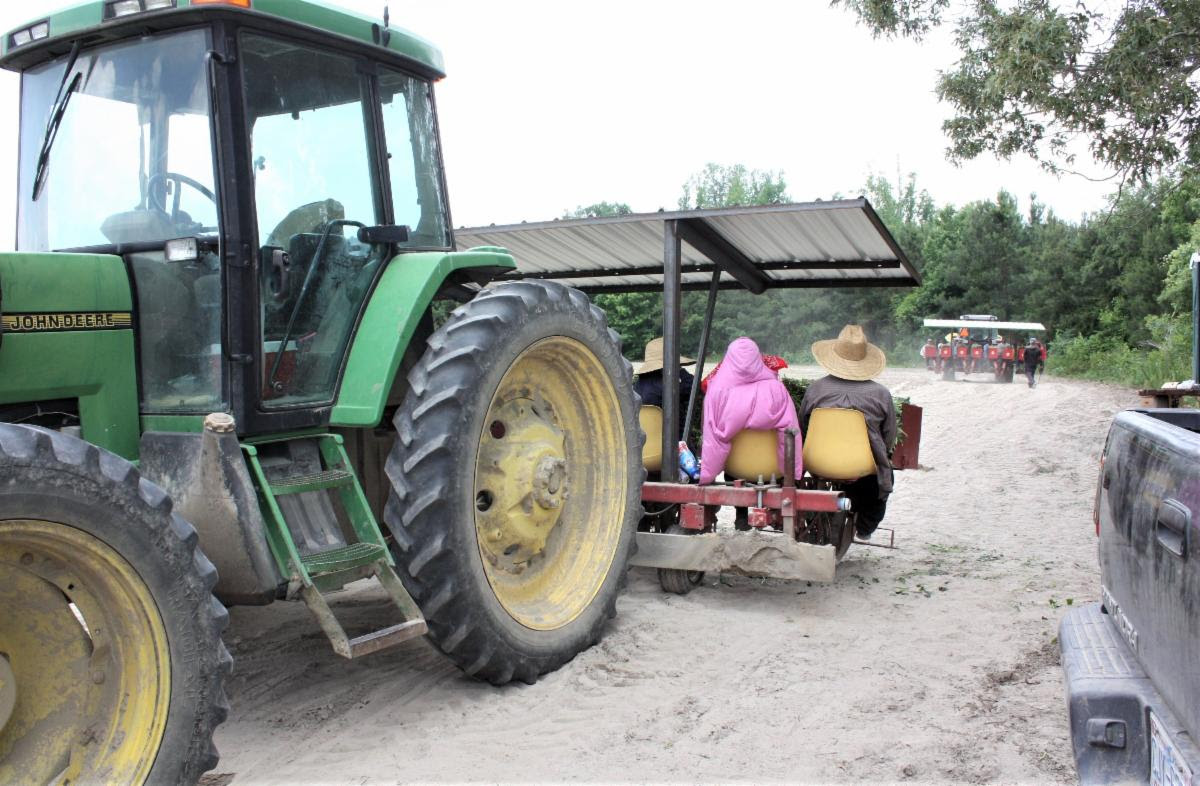
Still a long way to go: An Ohio burley grower and his crew hustle to get the crop out. (File photo by the editor.)


FLUE-CURED
  • Virginia--Probably half of the flue-cured crop here went through a period of very cold weather, says David Reed, Virginia Extension tobacco specialist. Some, but not all, is showing the effects. Favorable weather, like most of the tobacco area experienced this week, would help. The range of development on this crop is very wide. "We have tobacco being set this week and some that will soon reach layby," he says. The tobaccos set in the week leading up to the cold snap experienced the most damage. Perhaps 200 acres had to be replanted. Overall, the crop is fairly uniform though it's a bit off color. Reed predicts that between 14,000 and 15,000 acres will be planted. USDA estimated that 75 percent of the crop had been set by the end of May. 
  •  North Carolina--Only a little flue-cured, if any, remains to be planted. The acreage is not clear yet, but Matthew Vann, N.C. Extension tobacco specialist says, "I don't see how we could wind up with much more than 100,000 acres," Vann says. Transplanting was behind from the start because of rain and multiple frost events and many days when there was a threat of a frost. "We are finally getting some normal dry weather here in Raleigh. We are hoping tobacco will 'jump' and will make up some lost time," Vann says. 
  • South Carolina--Heavy rain has slowed field work. Planting is complete but topping hadn't begun as of May 31, according to USDA's Crop Progress Reports. Estimated acreage remained 7,000 to 7,500.
  • Georgia-Florida--Tobacco continued to look uniform and healthy with some areas showing signs of heavy deer damage, according to USDA's Crop Progress Report. One percent had been topped by May 31. Acreage in Georgia was estimated at 8,000.

BURLEY

  • Kentucky--The crop has made a lot of progress in the last week and a half and is off to a good start, says Bob Pearce, Ken-tucky Extension tobac-co specialist. It ap-pears that farmers will get all the acres planted that they planned to. The plant supply has been adequate. Around 50 percent of the crop has been planted, he estimates. It had been too wet early in this planting season, but now a little shower would be welcome on a lot of farms, he says.
  • Tennessee--The crop in Middle Tennessee is later than usual, says Rob Ellis, Director at the Highland Rim Experiment Station in Springfield. There has been a lot of rain in this area, and plants have been affected. "But they will be okay if we can get some dry weather," he says. "We got some here [Springfield, Tn.] and it helped." Planting at the station is continuing. "What we have planted here has only been in the ground for about two weeks." The oldest burley in middle Tennessee was only transplanted about three weeks ago, he adds. 
  • North Carolina--In the burley-producing area of western N.C., it has been extremely wet. At the research station in Laurel Springs, nine inches fell in a five-day period the week before last, and the soil is still drying out. "We haven't started transplanting at the station yet," Vann says. For all N.C. burley, an estimated 34 percent has been planted, according to the Crop Progress Report. 
  • Virginia--Just under half of the burley crop had been set by May 31.


DARK


  • Virginia--The small Virginia dark fire-cured crop will be smaller this year. American Snuff--one of the major buyers--decided not to contract for the type in Virginia. The early estimate is that plantings will be down a third. Nearly two thirds have been planted. Some fire-cured growers are turning to Connecticut broadleaf. They have an advantage in growing it because they are familiar with the labor-intensive process of producing wrapper leaf, which is what broadleaf buyers are looking for. NOTE:  There is probably a demand for more fire-cured wrappers on the current market than is currently being met, sources have told TFN.
In other tobacco news:

GAP training: You have till June 30 to participate in the GAPConnections online program if you weren't able to attend a meeting. Login into GAP Connections and find the link for Online Training on the Grower Dashboard. Follow the instructions. Questions? Please call GAPC at (865) 622-4606.


REPORT FROM OVERSEAS

Zimbabwe--The much delayed opening of the tobacco market has finally taken place. It had been stalled by government officials for a month while methods to prevent spread of coronavirus were developed. The restrictions they have imposed have not set well with growers, especially a stipulation that tobacco will be sold only by appointed agents and not by the farmers, who are forced into waiting areas so as to reduce crowds at the auctions. "We are not afraid of coronavirus," one farmer told the ZimLive.com news organization. "The risk is that farmers could be cheated out of their money due to the new guidelines which say we must give our crop to a representative who will come here to sell on our behalf."


Friday, May 29, 2020

A GOOD START IN THE DEEP SOUTH-- RAIN, COLD HAS SLOWED SETTING ELSEWHERE


No-tillage is playing a bigger part in burley production. Improved conservation and reduction of trips across the field are two of the reasons. A special transplanter is needed, like the C&M Trium shown here.

REPORT ON THE CROP 

In Georgia and Florida, the crop is off to a good start and looks better than average, says Georgia Extension tobacco specialist. Not only that, the level of tomato spotted wilt is low. Some farmers are beginning to make their last cultivation. Moore thinks around 8,000 acres have been planted in Georgia. "We lost a few farmers, and some of those who remained cut back. At this point, it looks like it might be a smaller crop, but not significantly smaller." All has been the field for several weeks.

In South Carolina, on the other hand, things haven't gone nearly as well. "Rain put a hurting on us," says Matt Inman, S.C. Extension specialist. "We had seven inches of rain at the Pee Dee station from Monday through Tuesday of last week, then had 2.5 more on Friday and Saturday." There was some drowning and some flopped plants, and there's been a little more tomato spotted wilt than expected, maybe five to six percent of plants. "We haven't had a good start." Acres? There was some attrition among Palmetto State growers as there was in Georgia, but plantings don't appear to have been drastically reduced. "I would estimate 7,000 to 7,500 acres," says Inman. Planting has been complete for some time.

In other tobacco states, according to USDA's Crop Progress Reports:

In North Carolina, flue-cured planting in N.C. was 89 percent com-plete. In Franklin, Halifax and Nash Counties in the northeast, the
planting season had been hit by very cool, wet conditions. To-bacco was just sitting still till farmers could get in the field to plow the crusted, water logged soil. In Cumberland and Robeson Counties in the southeast, windy conditions have deteriorated small plants, but it appears most resetting has been completed. Excessive rainfall amounts have caused lots of standing water in fields. In Virginia, about 63 percent of the flue-cured and 43 percent of the fire-cured crop had been transplanted.

In western North Carolina, planting of the small burley crop was 21 percent complete. In Ashe, Watauga and McDowell Counties, six to 10 inches of rain fell last week. Substantial flooding and excess soil moisture have impacted tobacco. In Tennessee, farmers in the central part of the state were waiting for a break in the rains. Setting of tobacco was limited. In the east, despite warmer temperatures, wet conditions brought most field activities to a halt. In Virginia, about 33 percent of the burley has been transplanted. In Kentucky, farmers continue to make headway with planting, but wet conditions have hampered progress at times. Only 17 percent of the crop has been set out so far, half of the five-year average. Producers need successive days of dry weather to push through with getting tobacco in the ground. Rainfall was heavy at times in Kentucky, and there were reports of flooding and crop damage in areas of the state. Tobacco setting made up some ground after very little progress was reported last week. The damage from the very unseasonable freeze and accompanying cold weather on May 9 is still to be reported but it is not expected to be extensive since so little of the crop had been set by that time.

In other news: 

Was your GAP meeting cancelled? Thanks to the COVID-19 measures, many GAP meetings were. As an alternative, GAP Connections has set up an online option to receive GAP Training for this year. Note: It must 
be completed by June 30 for you to participate in the GAP Connections Cer-tification Program. Login to GAP Connections and find the link for Online Training on the Grower Dashboard. Watch the two videos prov-ided and complete the quiz afterward. A 100 percent score on the quiz is re-quired. Once that is achieved, a record is placed on your Grower Training Report. To confirm, go back to the Grower Dashboard or click Menu in the upper right hand corner and navigate to Training. It may take up to 24 hours for Training to show. Questions? Please call GAPC at (865) 622-4606.


Sunday, May 3, 2020

MORE THAN HALF OF FLUE ACRES SET OUT; BURLEY, DARK TRANSPLANTING JUST BEGINNING


Setting plants near Rocky Mount, N.C. File photo by the editor.

How much of the N.C. crop has been planted? "If I had to guess, I would say we have 15 to 20 percent planted by now," says Matthew Vann, N.C. Extension tobacco specialist. "Maybe 25 percent at the most. Compared to any other year, we are well behind." 

Mother Nature has not been friendly to North Carolinians this season. "This crop was seeded much later than normal, then we had the worst greenhouse season in my 10 years in North Carolina," says Vann. "Once we were ready to set out, it seemed like we had a big weather event every week, and our soils remained saturated. If we can catch a week with good dry weather and moderate temperatures, we can catch up soon."

At least 75 per-cent of the flue-cured crop in South Carolina has been planted, much of it in the week just ended. Weather hasn't been favorable here either. But in the three weeks just ended, heavy planting has been going on, says Matthew Inman, S.C. Extension tobacco specialist.
In Georgia, as of April 27, essentially all of the crop was transplanted. "Only about 350 acres are left," said J. Michael Moore, Georgia Extension tobacco specialist.  "However, this [acreage] belongs to a limited number of growers, and it may take until May 4 to complete the process."
Tomato spotted wilt is running only three to four percent of the Georgia stand, Moore says. All the crop was treated with Admire Pro and approximately 40 percent was also treated with an Actigard tray drench in the greenhouse.  No other pest problems have been reported.
Connecticut broadleaf picks up in popularity in Kentucky and Tennessee: After an apparently rewarding test crop in 2019, farmers in the Black Patch are planting significantly more Connecticut broadleaf this season. "There could be 2,500 acres or more grown in Kentucky and Tennessee this year," says Andy Bailey, Extension dark tobacco specialist for Kentucky and Tennessee. 

You really need to produce wrapper grades with this type. "Broadleaf that earned a wrapper grade last year sold for $4 to $6 per pound," says Bailey. "But for leaf that doesn't get a wrapper grade, the price offered is less than for burley."

Slightly earlier than normal start for K-T transplanting: Transplanting in the Black Patch typically doesn't begin till May 1, but a little was planted early this season, says Bailey. "For instance, one grower in Logan County, Ky., was able to set out nine acres last Tuesday (April 28), and he wanted to plant some more on Friday."

But the dark that was planted in April made up less than one percent of the crop, Bailey says. Planting will get started in earnest next week and especially the week from May 11 to 18. "Much of the dark-fired crop is double cropped--an early crop is set in early-to mid-May and a late crop is set in mid-June so that both crops can be cured back to back in the same barn."

The dark types took a beating in contracting. US Smokeless Tobacco cut contracts drastically, with dark fire-cured reduced 45 percent and dark air-cured 48 percent. American Snuff, the number two buyer of the dark types, was reportedly unchanged in its contract. Bailey estimates dark fired plantings at 12,000 acres and dark air plantings at four to 5,000 acres. 

About 11 percent of Kentucky's burley greenhouses remained to be seeded as of April 26, USDA said. Thirty-seven percent of transplants were under two inches, with 44 percent two to four inches, and 19 percent above four inches. Little if any had been taken to the field.
Cancelled: NC State's Tobacco Field Day for 2020 has fallen victim to COVID-19
REPORT FROM OVERSEAS
ZIMBABWE: Tobacco sales here began last week after a month-long delay due to a general lockdown ordered by the government to contain the COVID-19 virus. The lockdown continues, but tobacco marketing has been exempted on condition that everyone involved observes recommendations to reduce infections. One suggestion: The national agriculture minister proposed restructuring deliveries to the floors to minimize the number of the human traffic coming to the markets and to reduce transport costs paid by the farmer.

Fewer growers: The Zimbabwean Tobacco Industry Marketing Board reported that the number of registered growers is 148,084 this year compared to 178,721 in 2019. Plantings are estimated down 12 percent, from 133,000 hectares in the 2019 season to to 117,000 for the current season.